
h邸
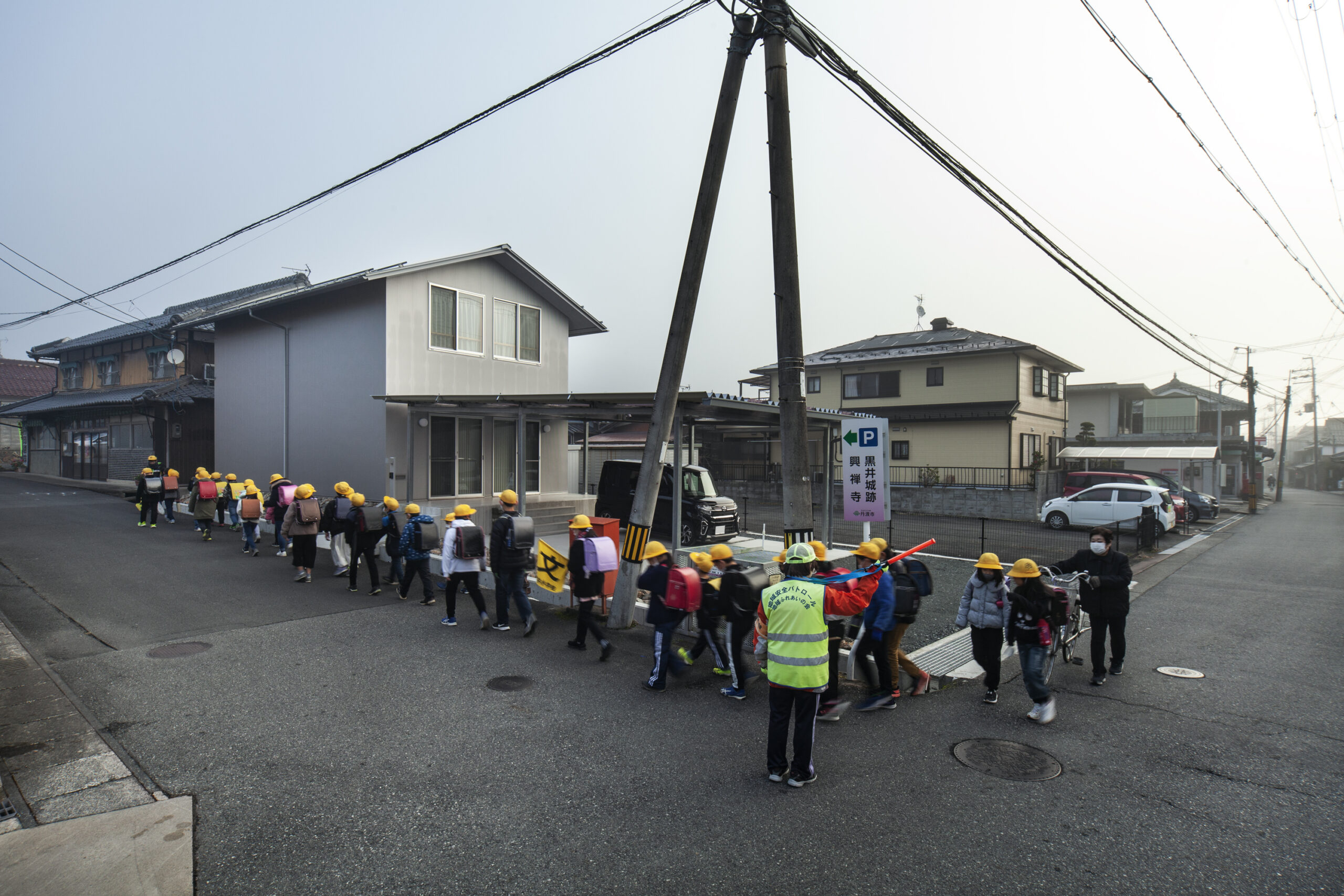
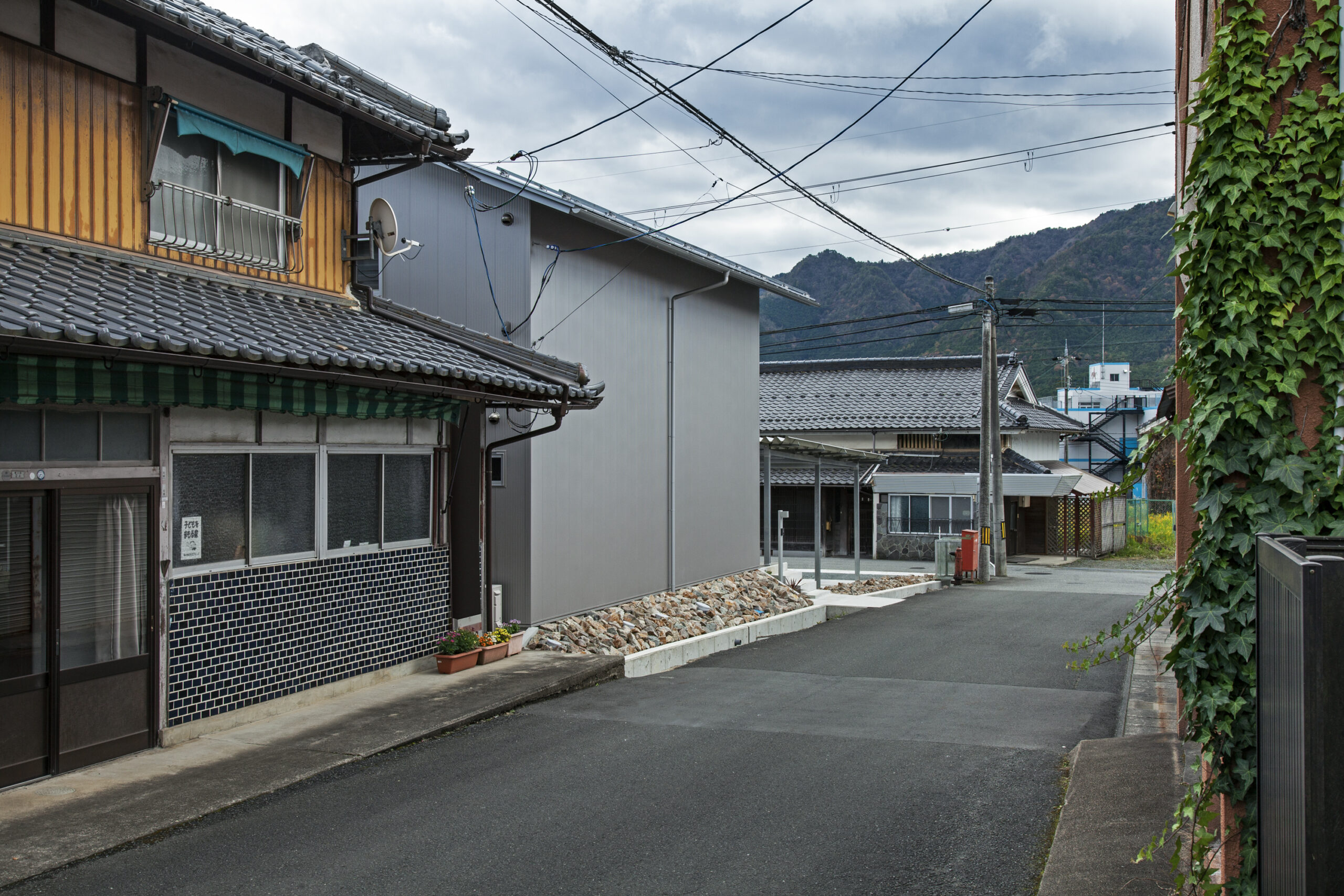
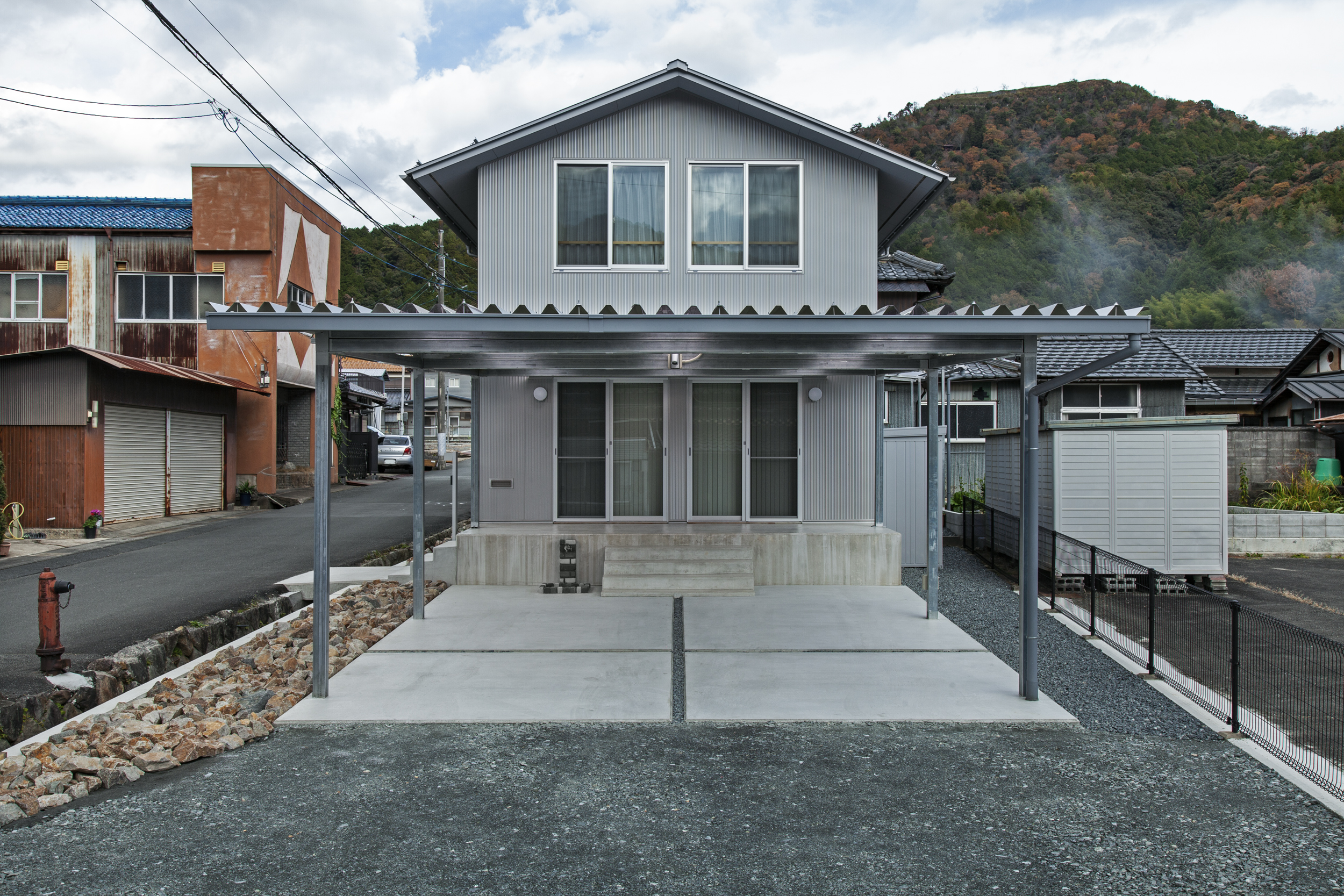



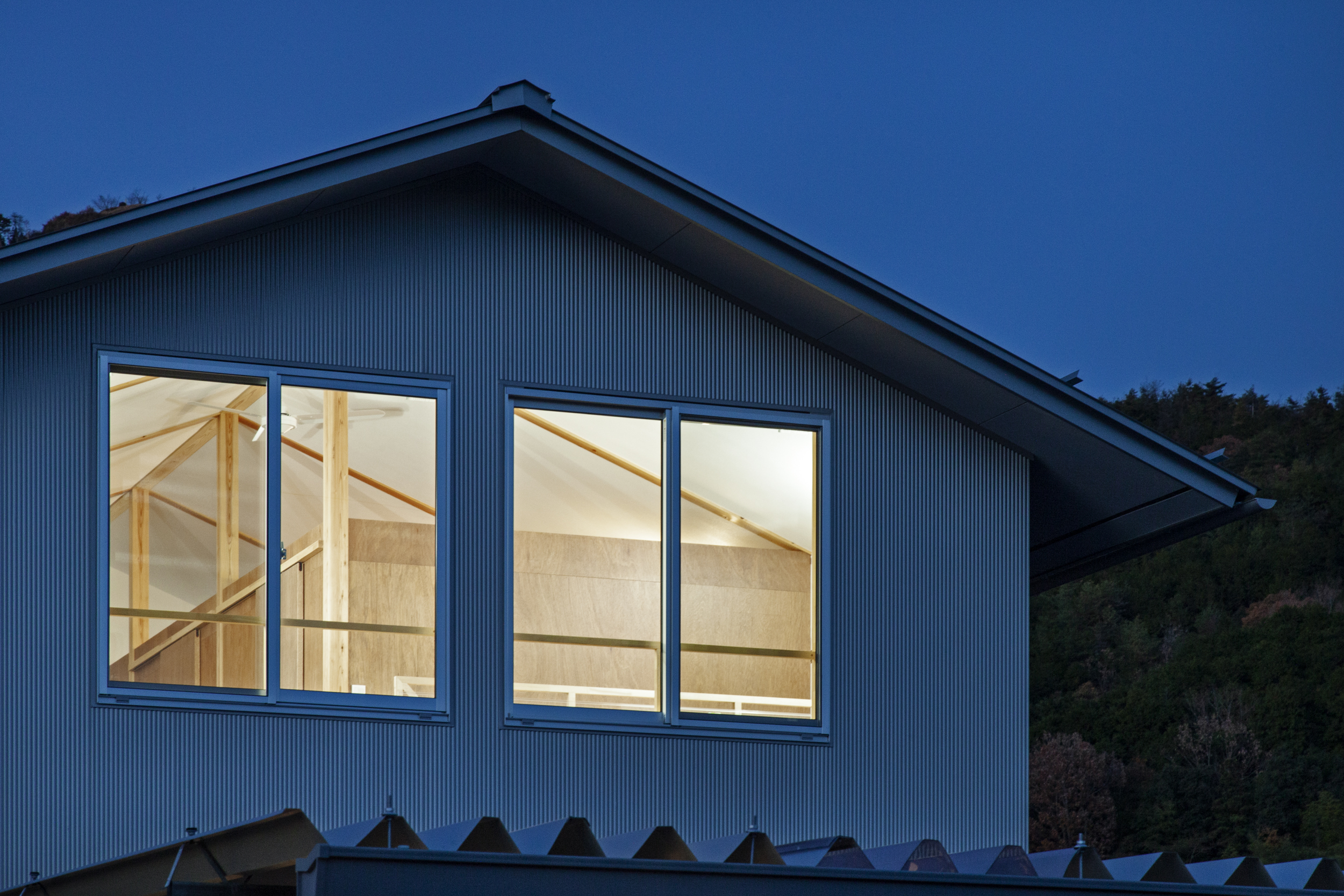
かつて商店が建ち並んでいた旧道沿いの角地に建つ、家族4人のための住宅である。
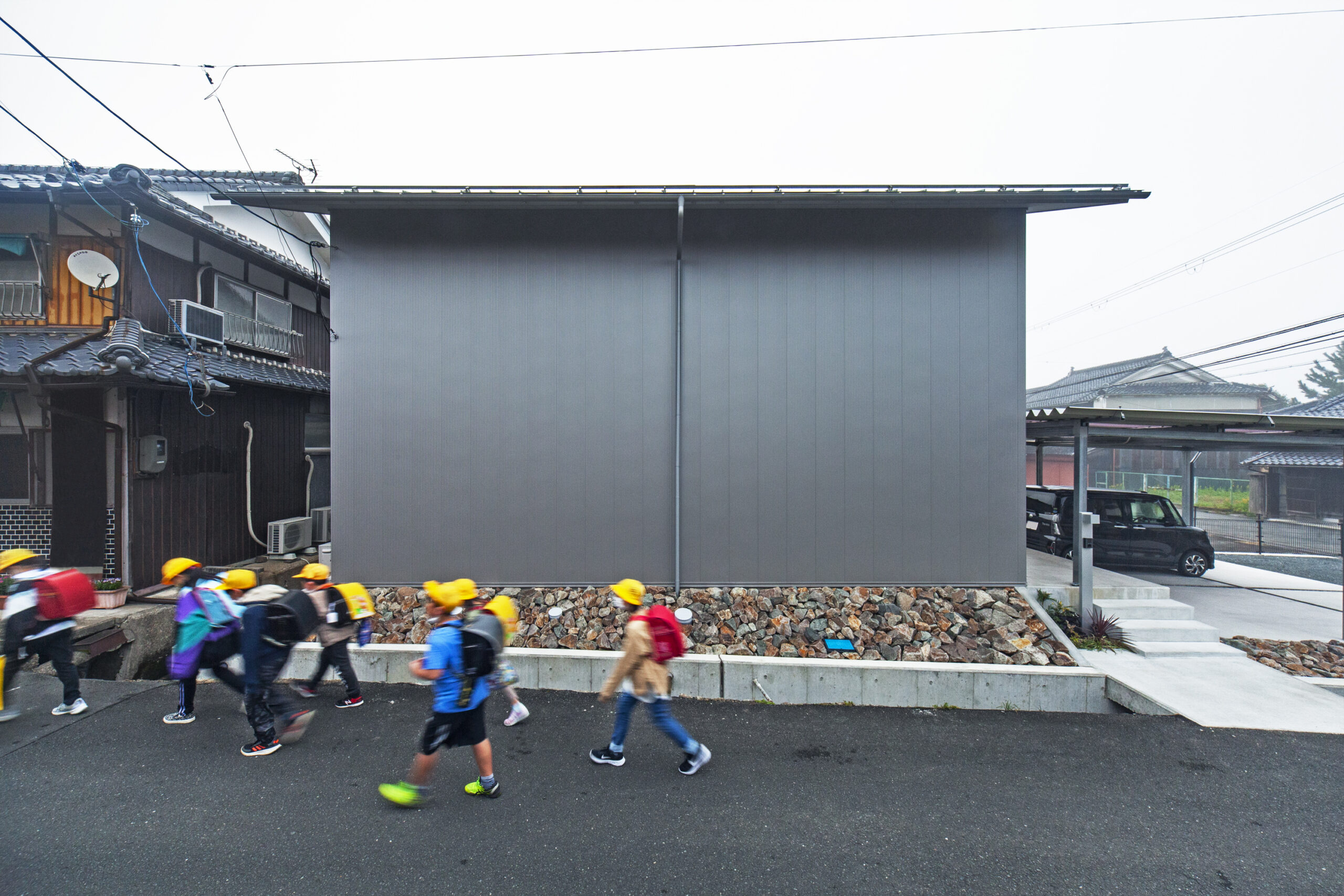
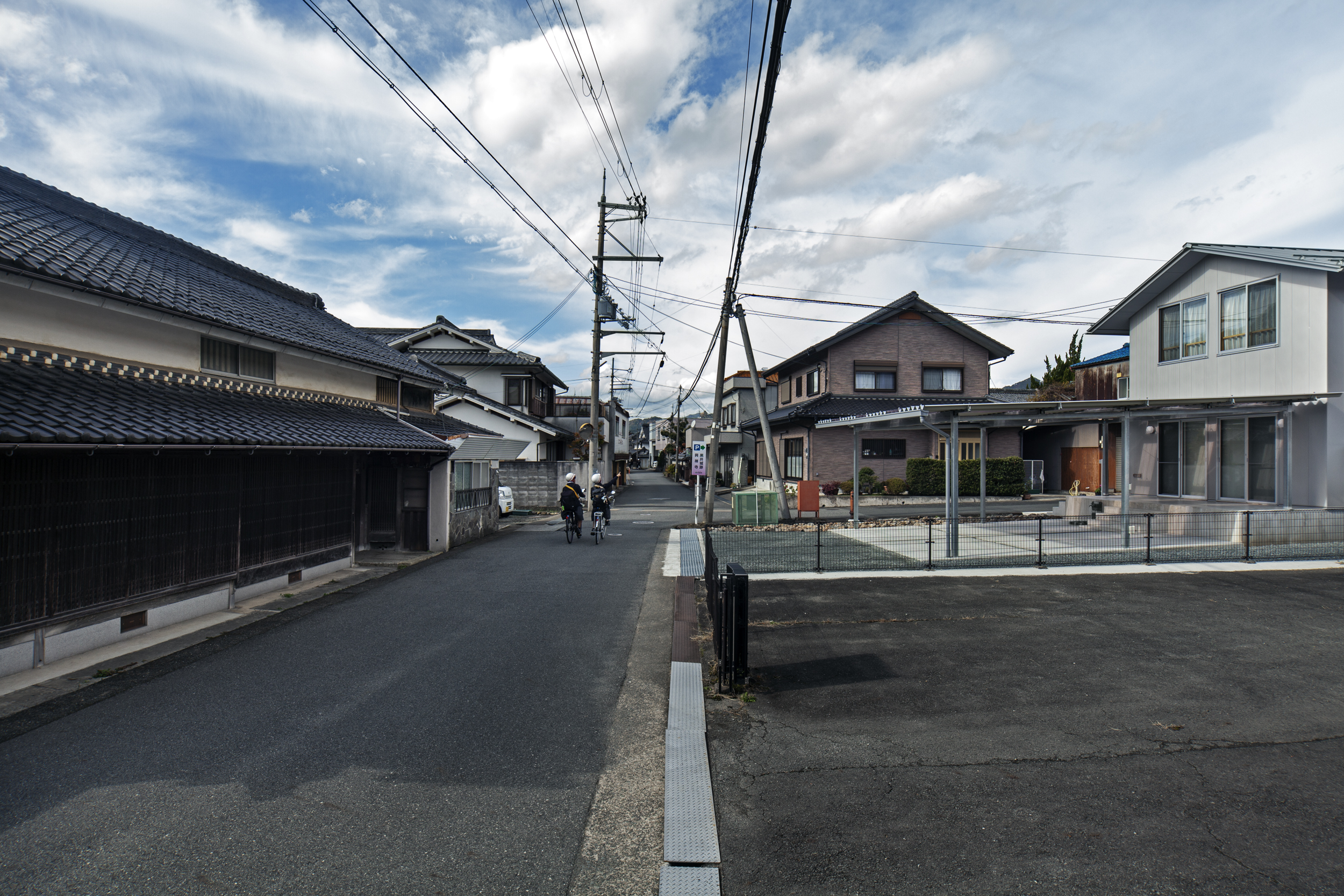
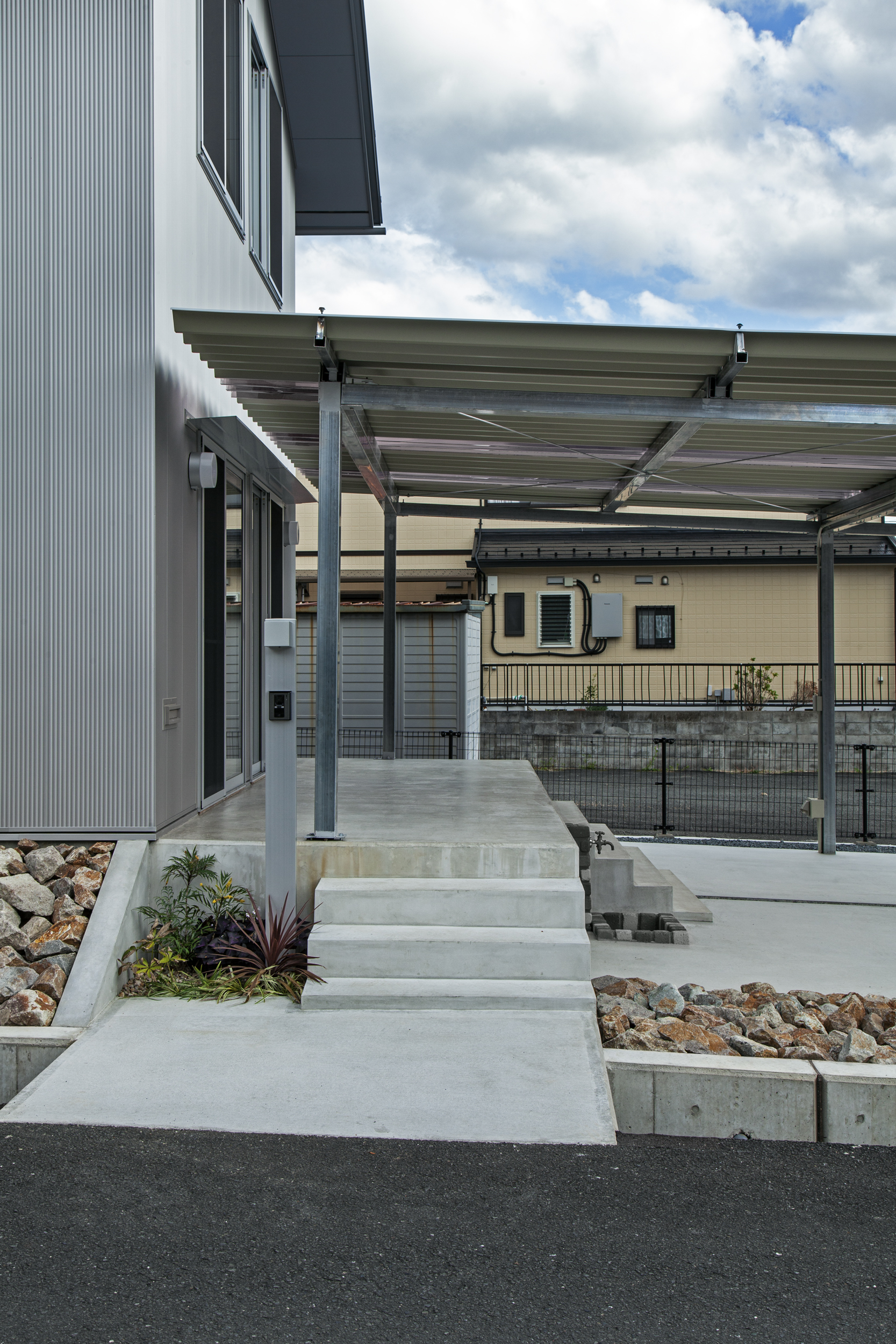
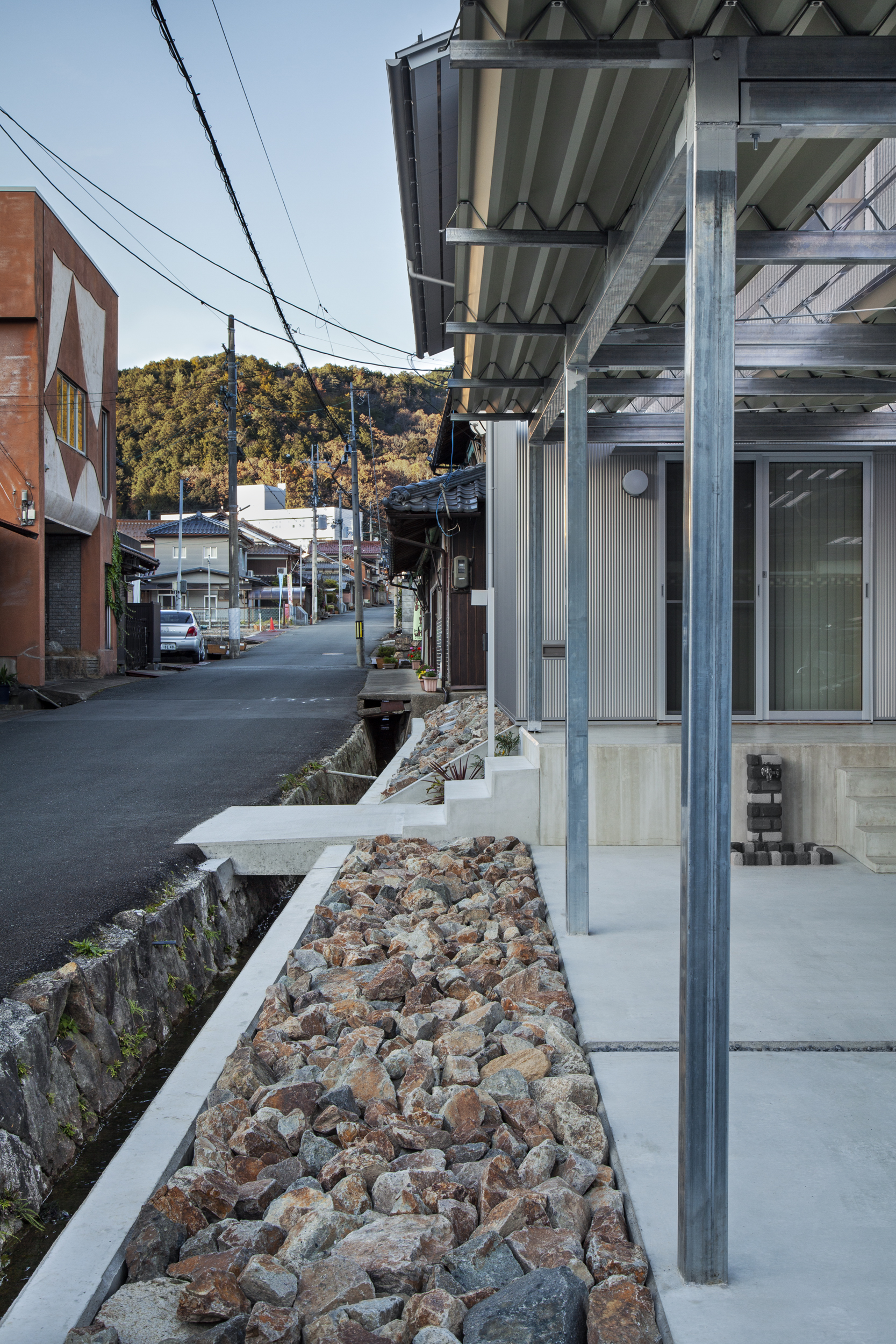
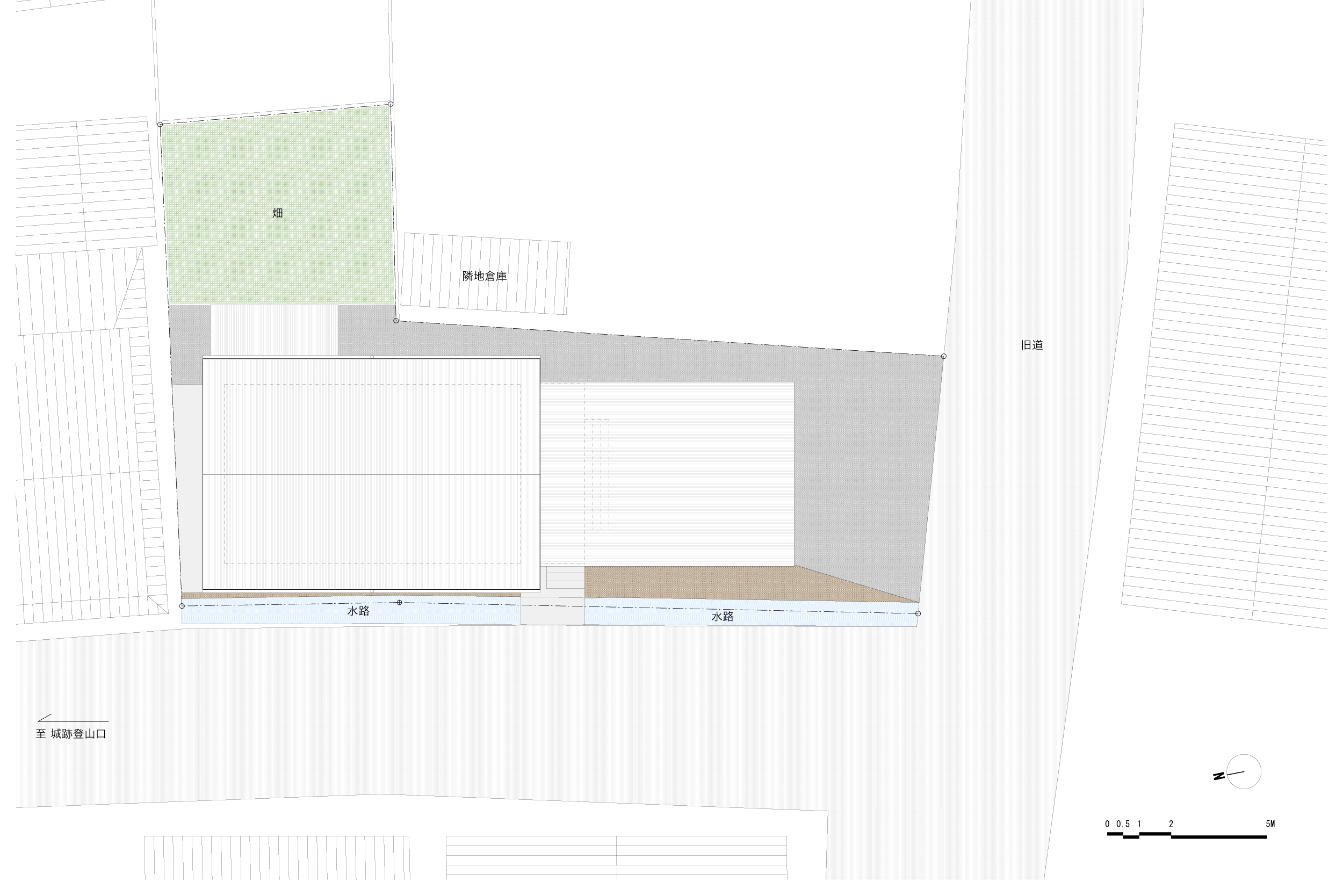
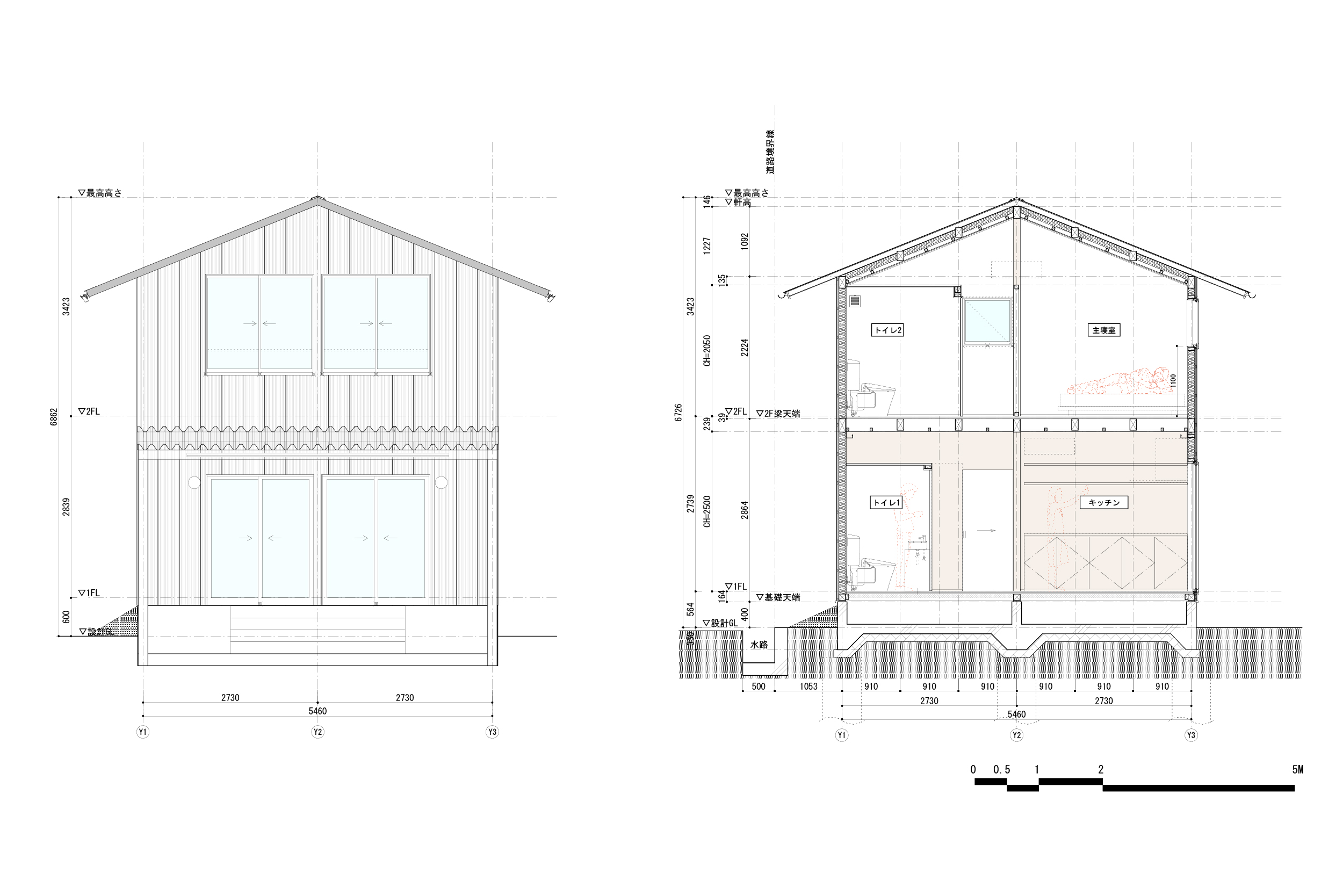
敷地の南(旧道)と西に面する道路は共に小学校の通学路であるため、平日は登下校する児童の行き来、週末はクラブ活動の送迎車など年間を通して交通量が多い。また、最寄り駅から敷地北側に位置する「城山」登山口へのルート上でもあるため、曜日・季節を問わず一定の人流がある。そこで、西側を完全に閉じた立面、南側を駐車場越しの開かれた立面とすることで、街との距離を確保した上で、旧道に対して明確な構えをつくった。
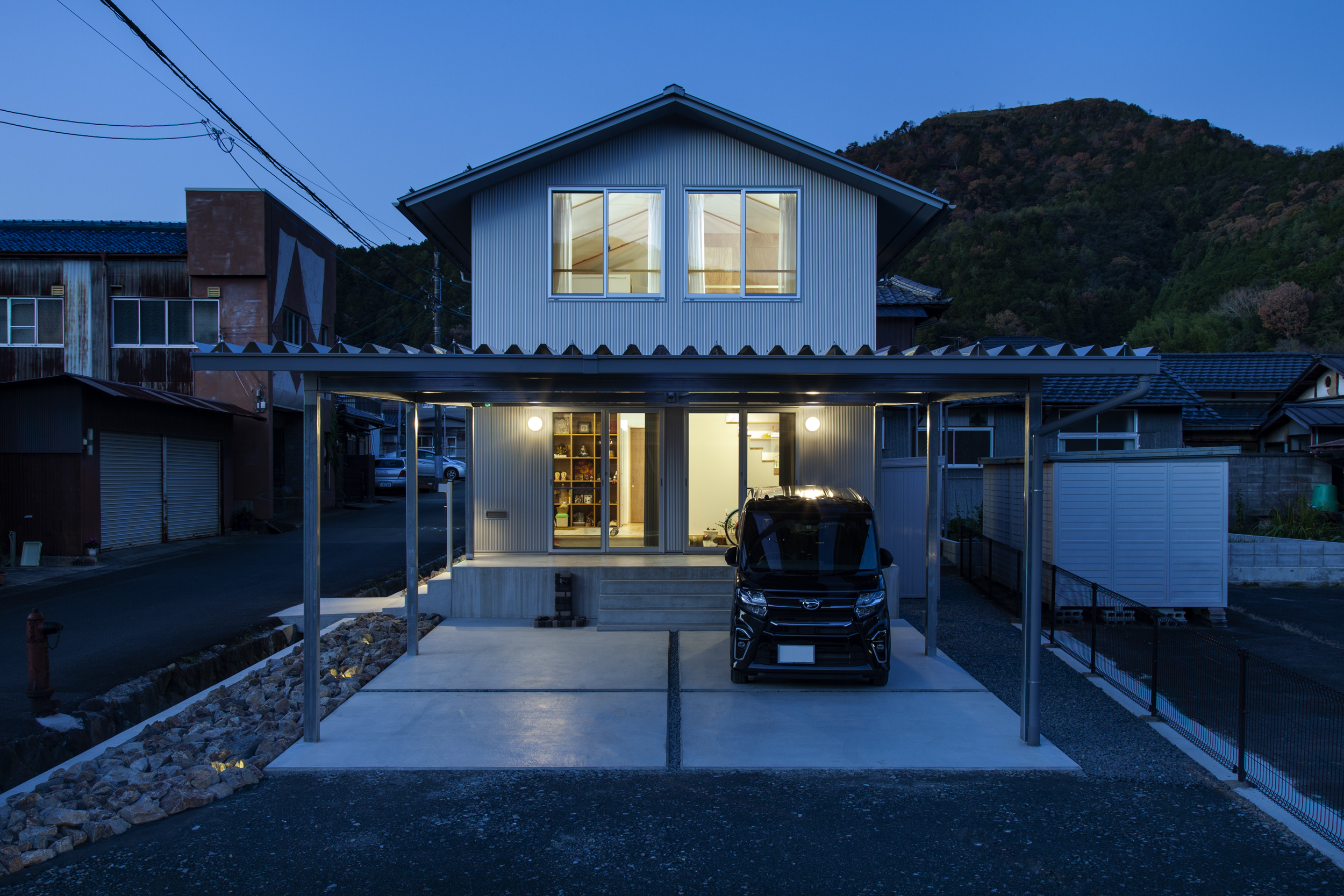
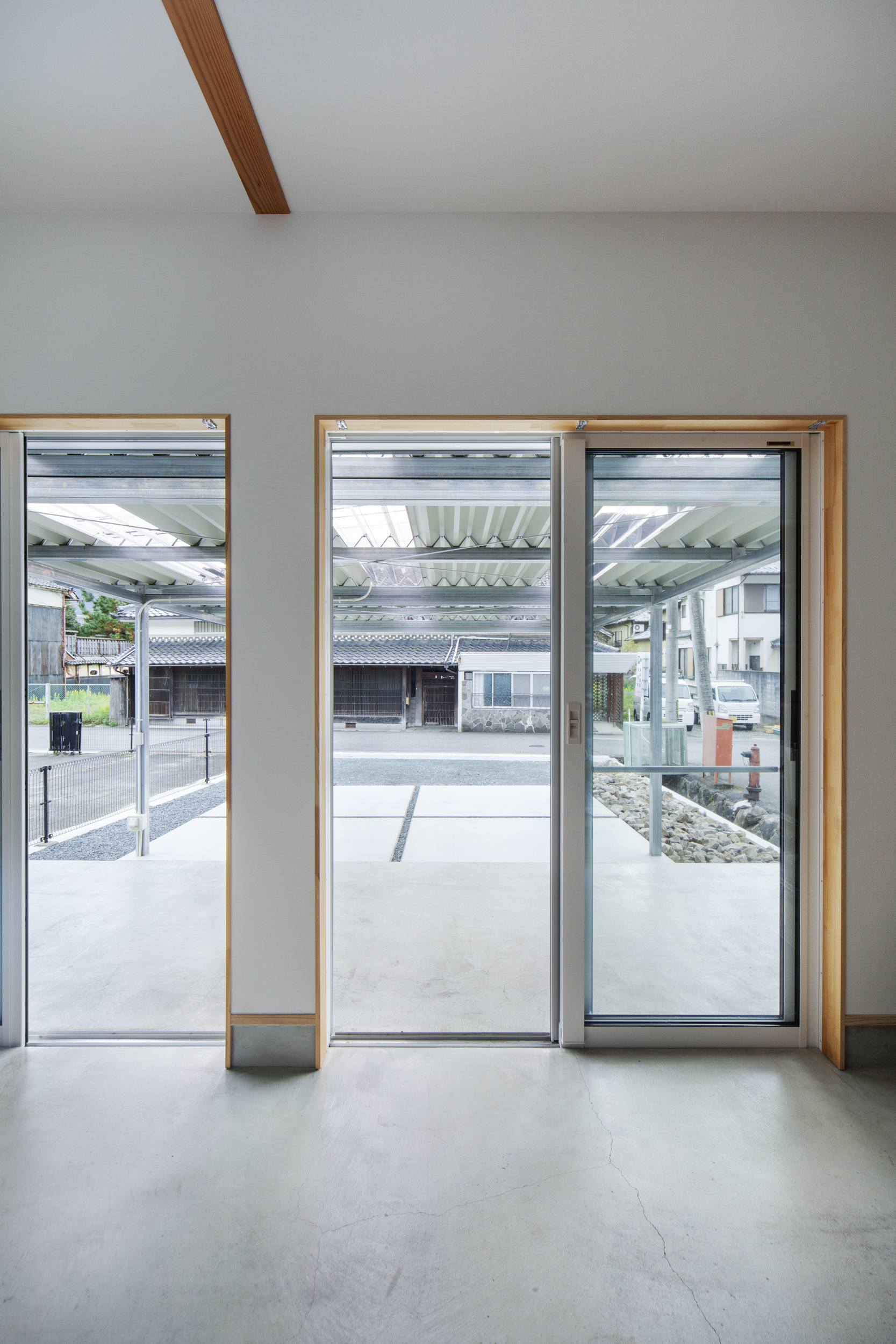
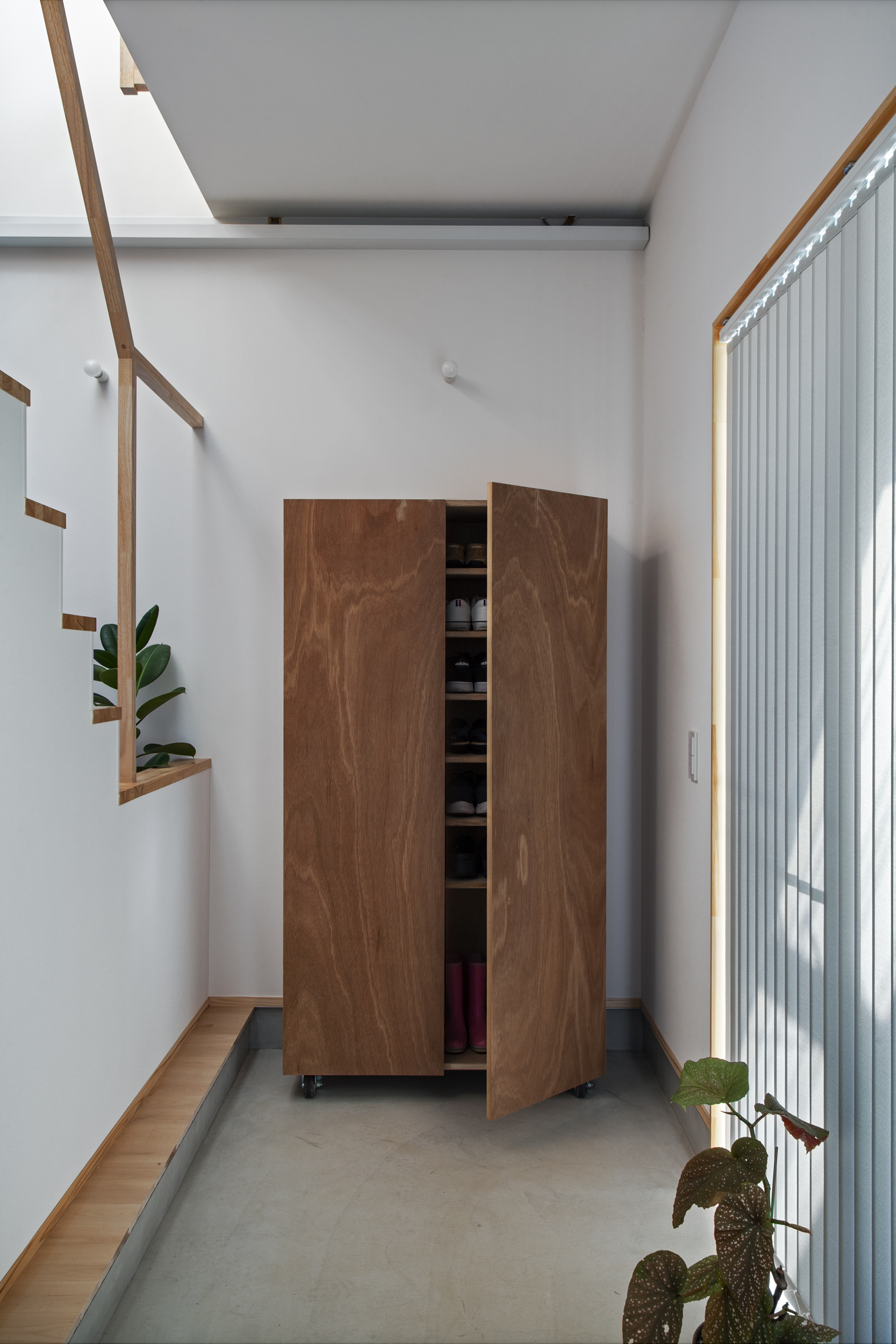
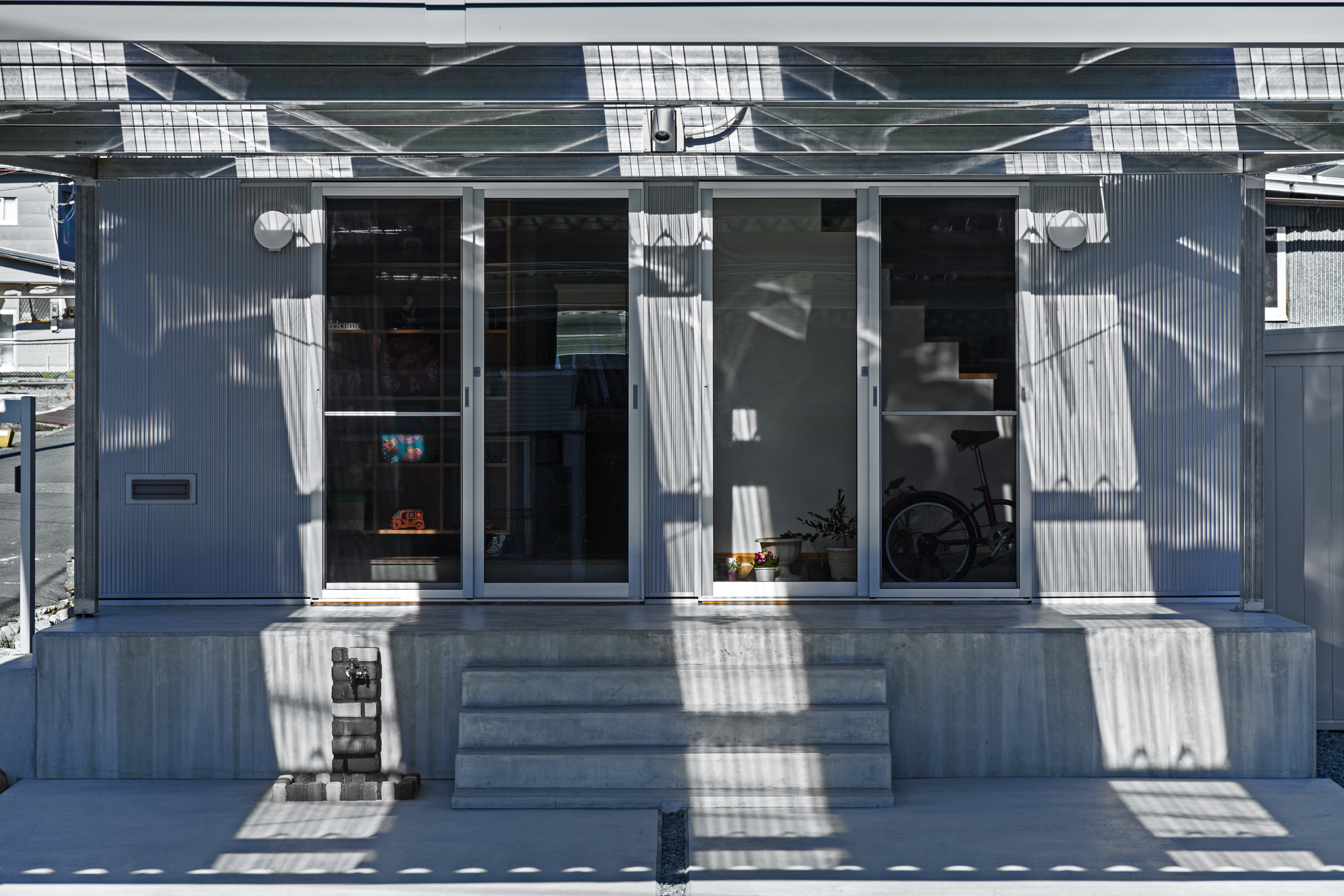
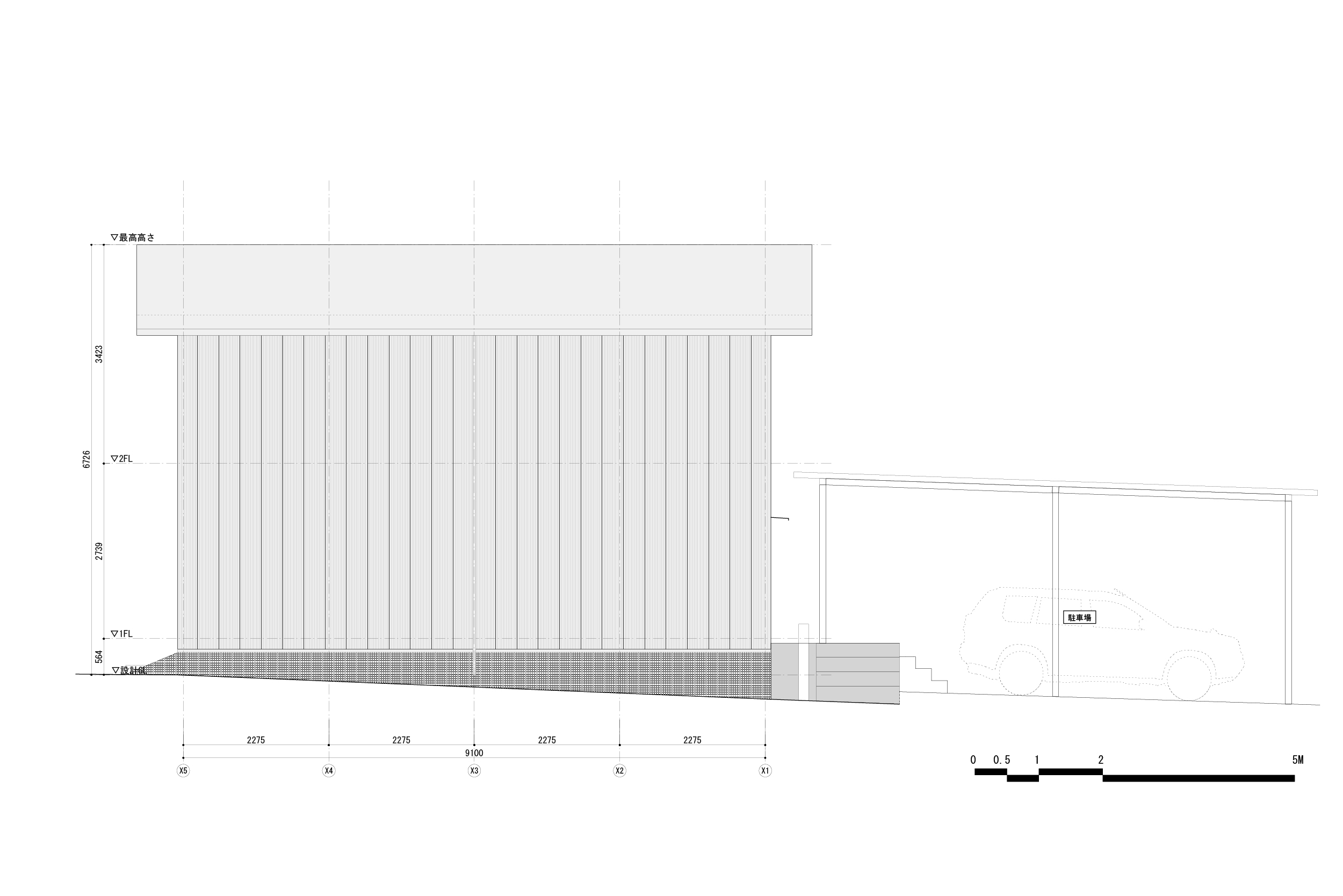
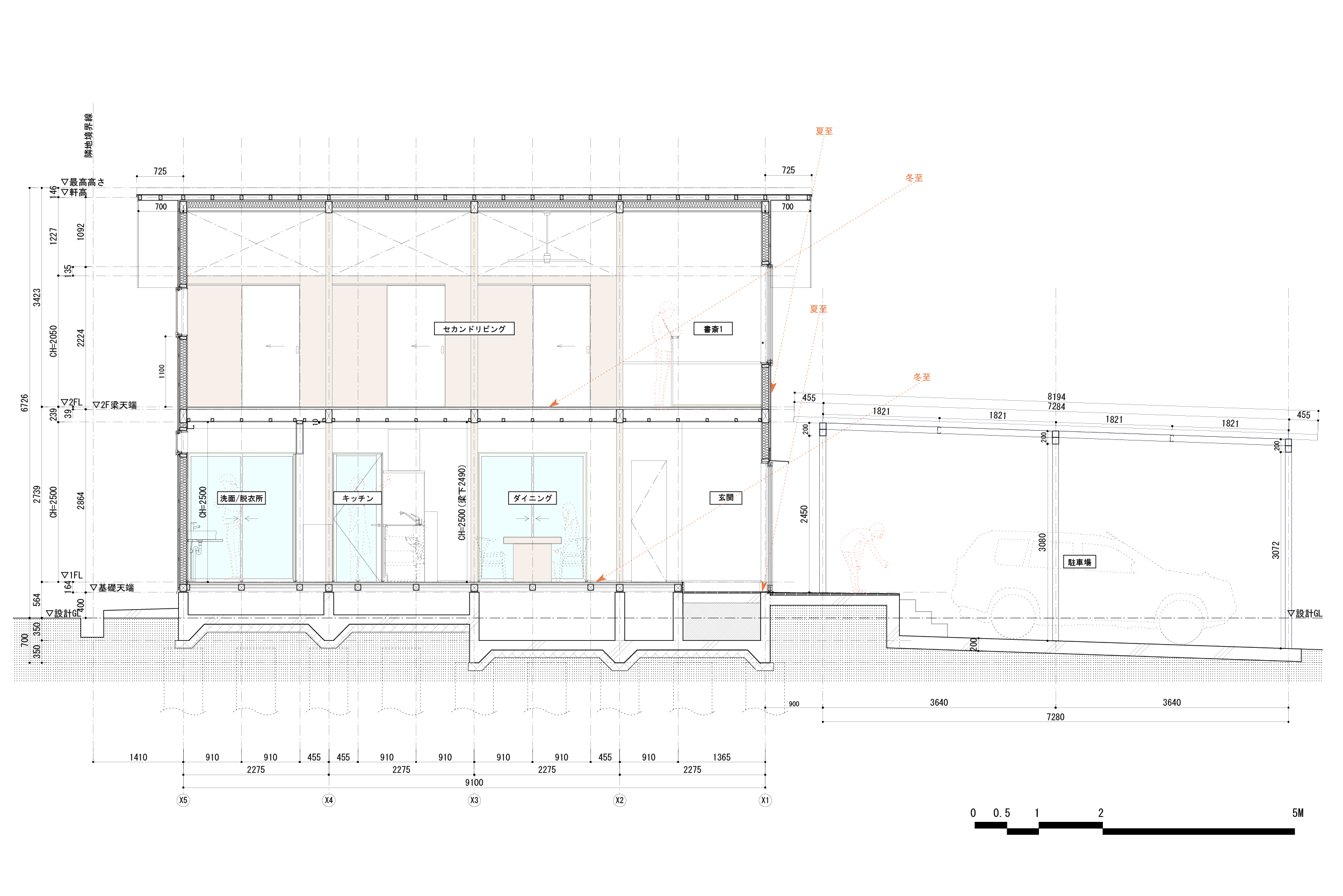
敷地周辺は、商店の廃業や建物の老朽化に伴う建て替えを機に店舗併用住宅から専用住宅に用途が変わり、旧道沿いに駐車場、その奥に閉じた住宅が建つ事例が散見される。本計画も旧道沿いに駐車場を配置しているが、近隣の店舗を踏襲した掃き出し窓の玄関にすることで、駐車場を玄関・リビングと一体的に利用できるセカンドリビングとし、暮らしの気配が旧道に滲み出すことを目指した。
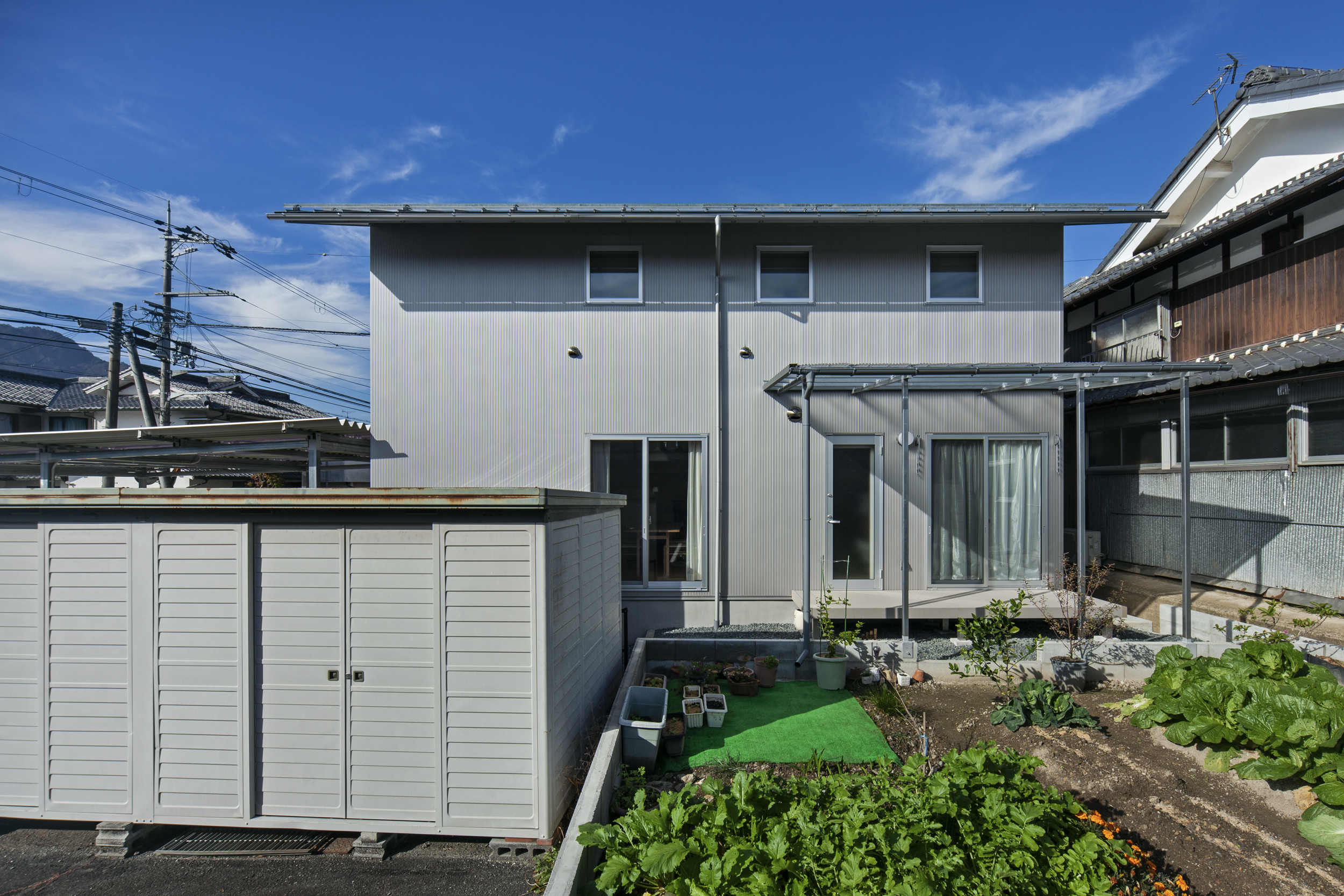
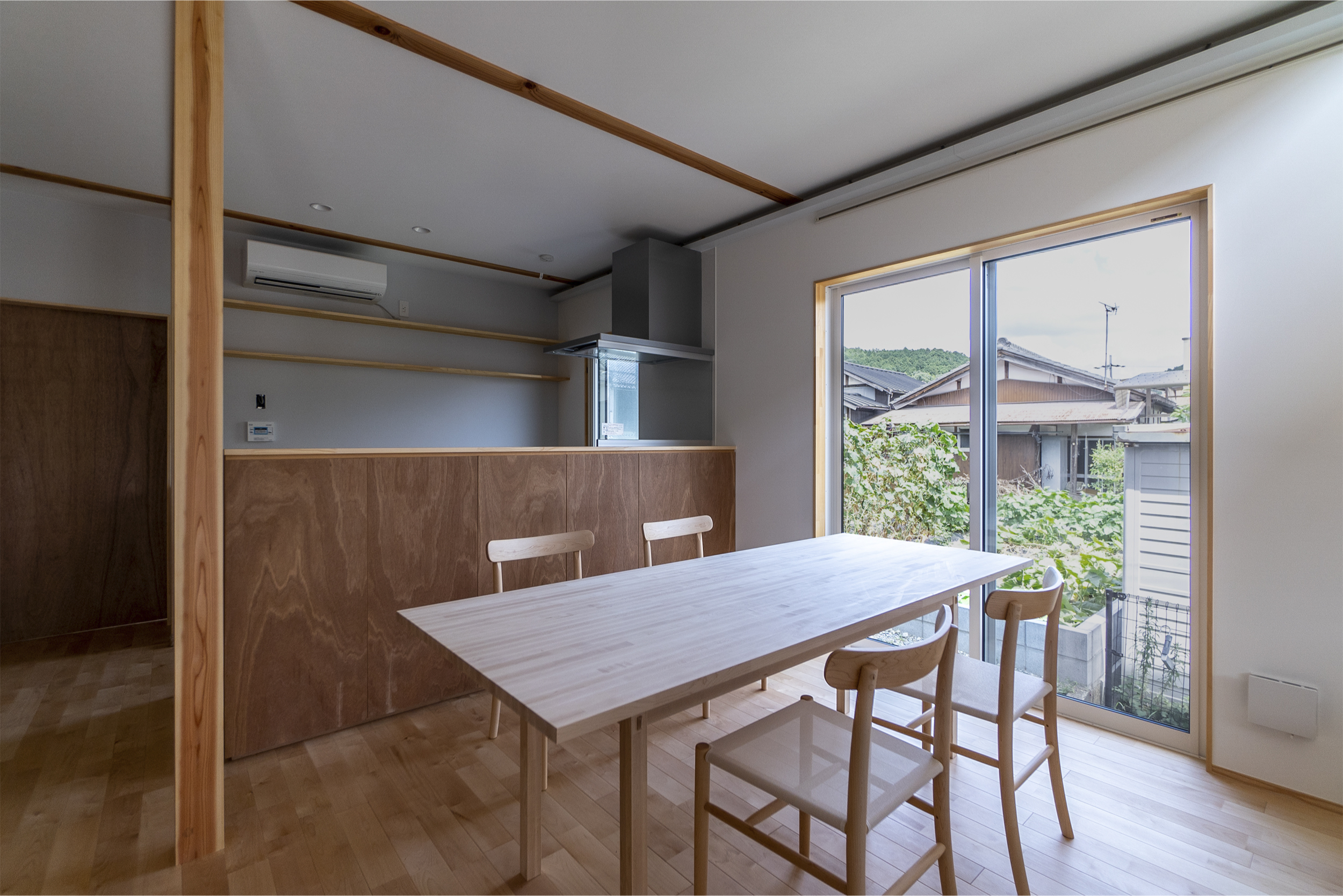
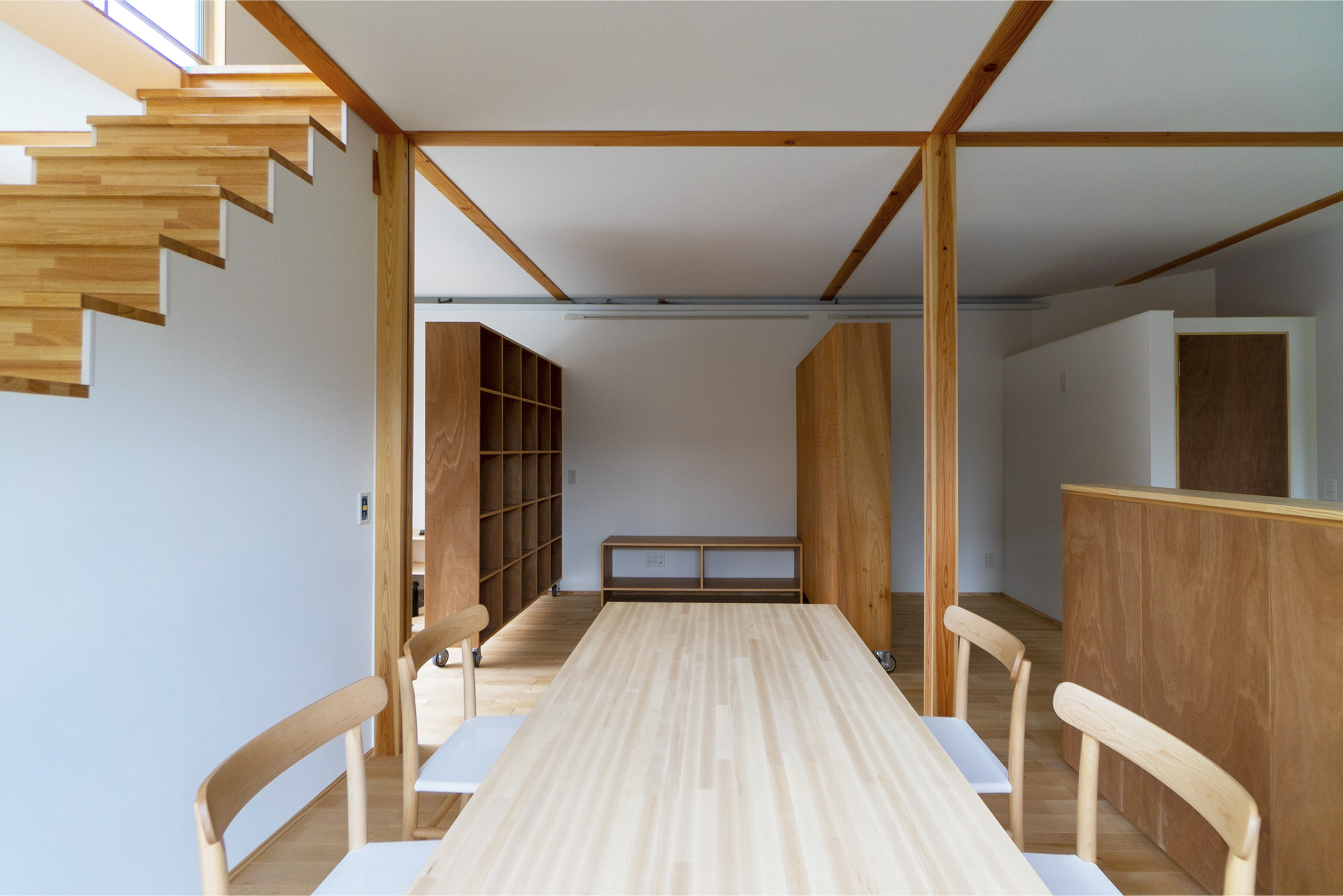
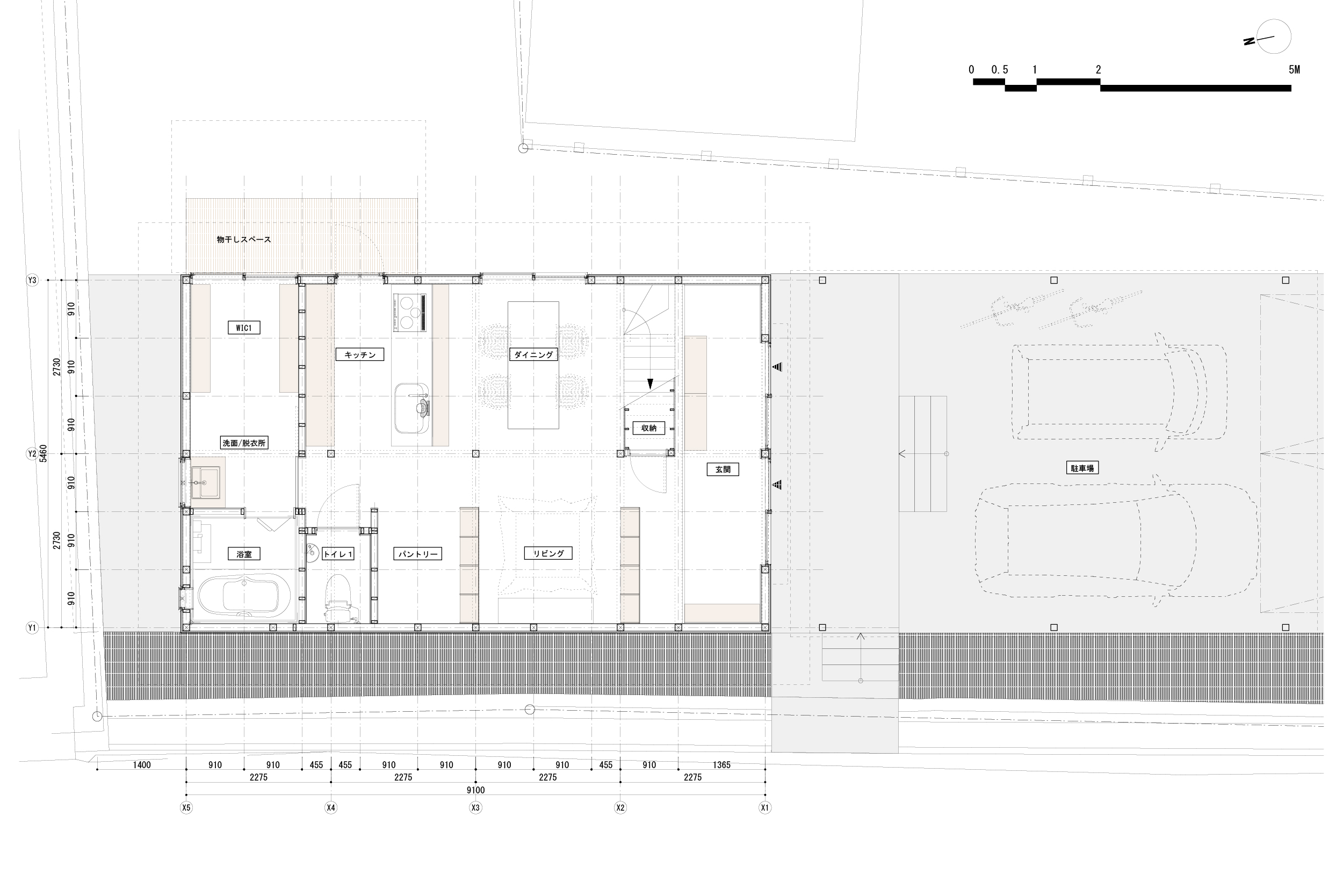
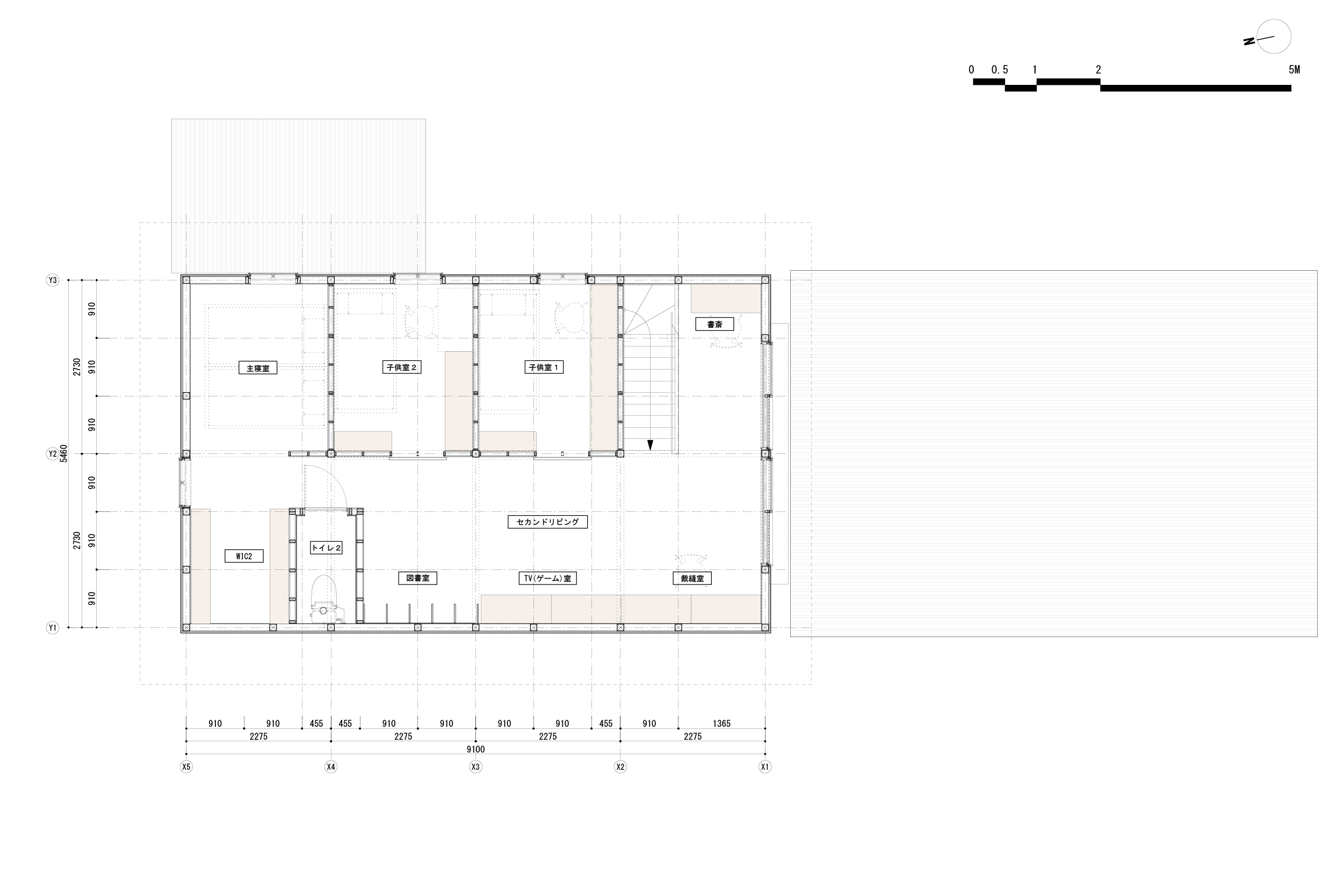
平面は、15坪の床を2層重ねたシンプルな構成で、1階に水回りとLDK、2階に個室が配置されている。15坪の床は、1グリッド(=構造の単位)2,275mm×2,730mmの合計8グリッドで構成し、1グリッドは、浴室・キッチン・玄関だと少し広く(=ちょっとブカブカ)、ダイニング・リビング・個室だと少し狭い(=ちょっとキツキツ)ため、設えがグリッドを日常的に横断することになり、そのことで平面が硬直することが避けられると考えた。
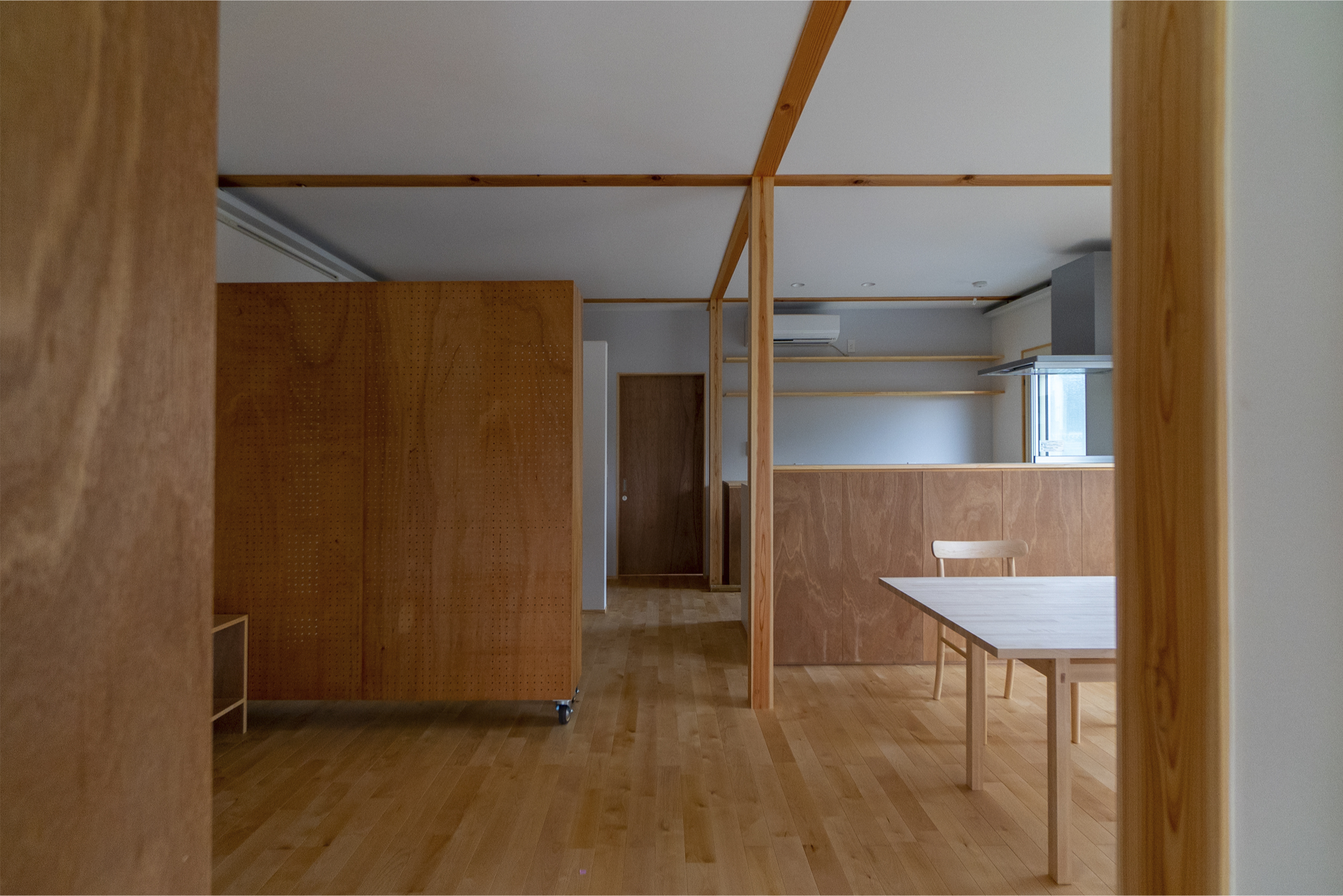
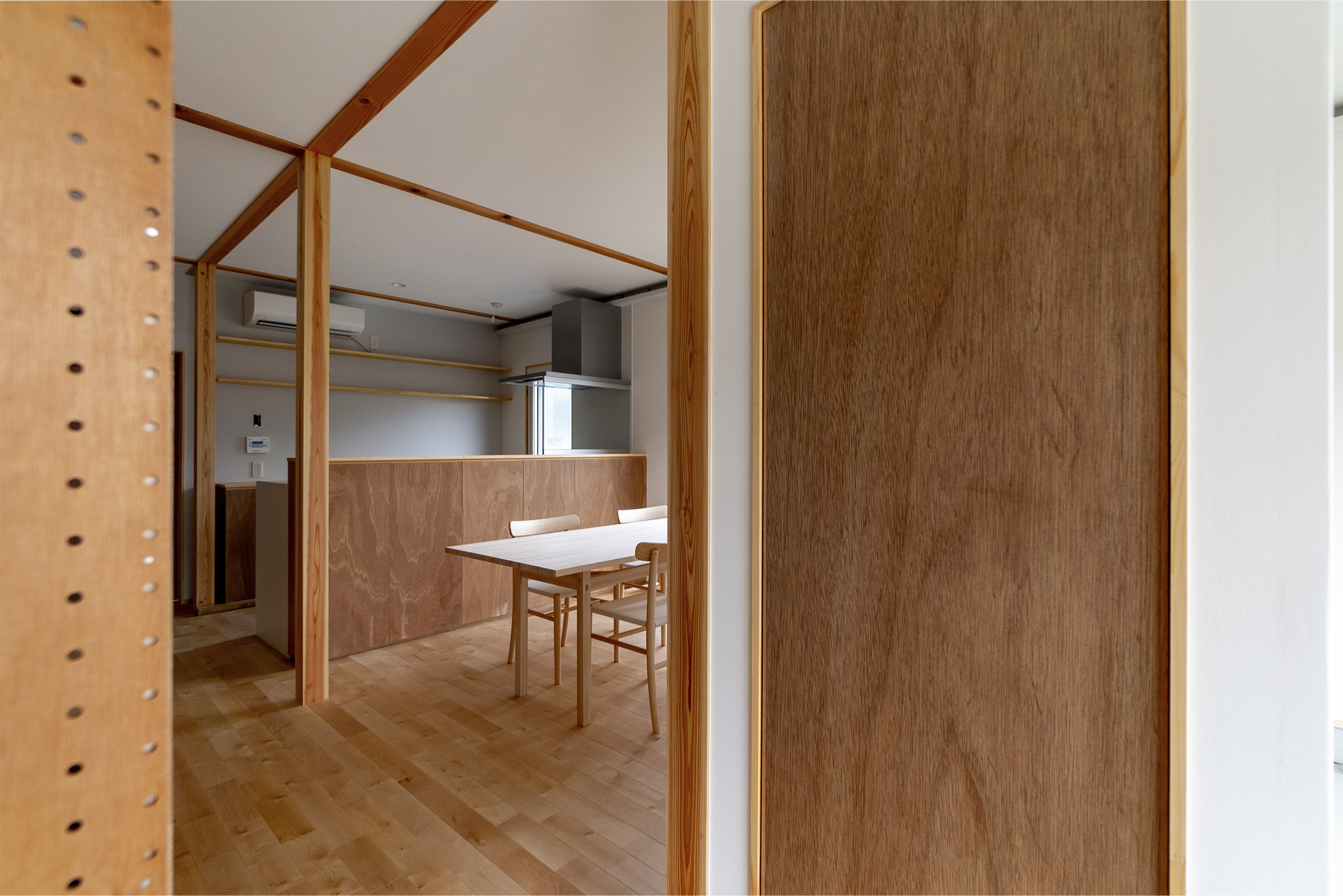
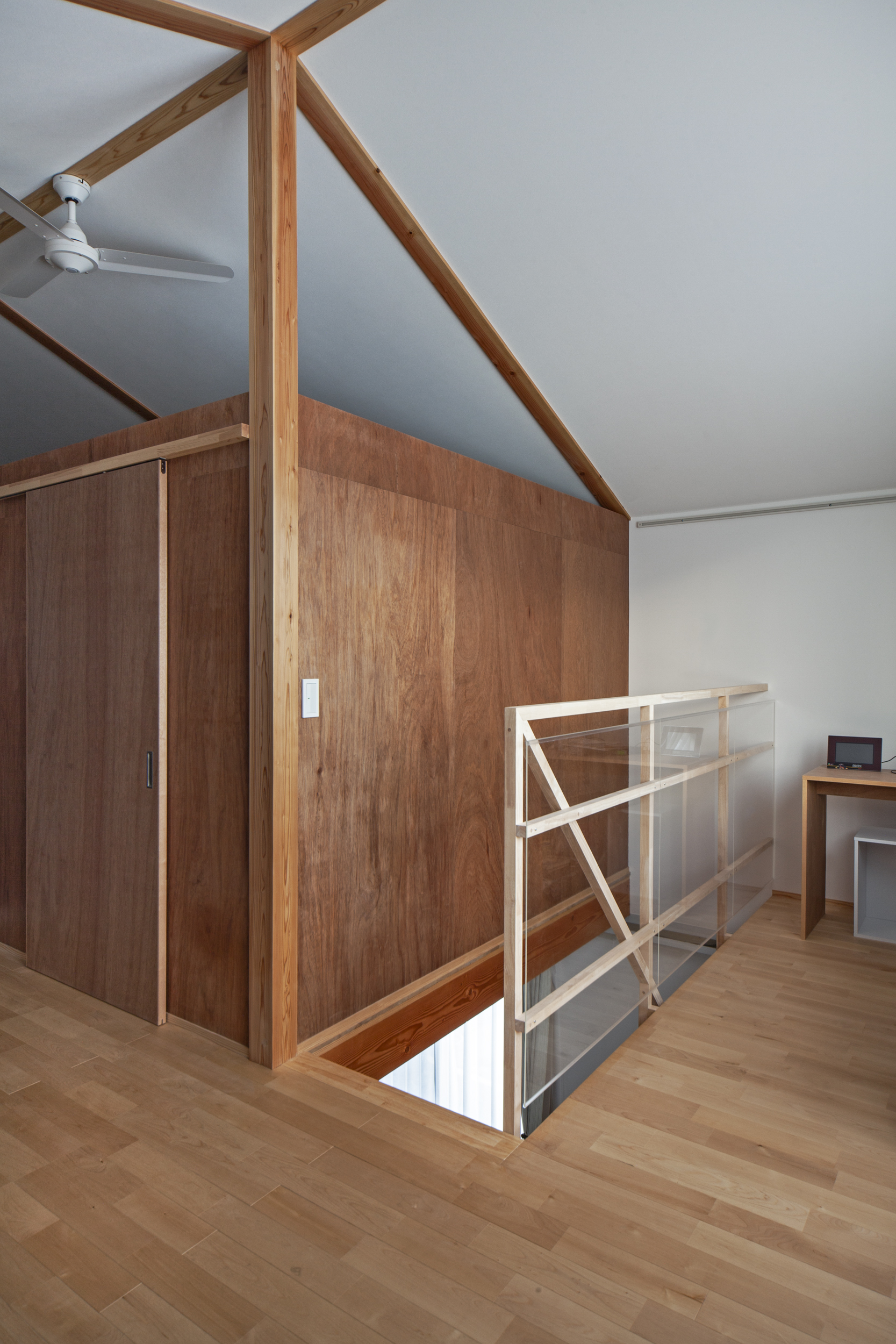
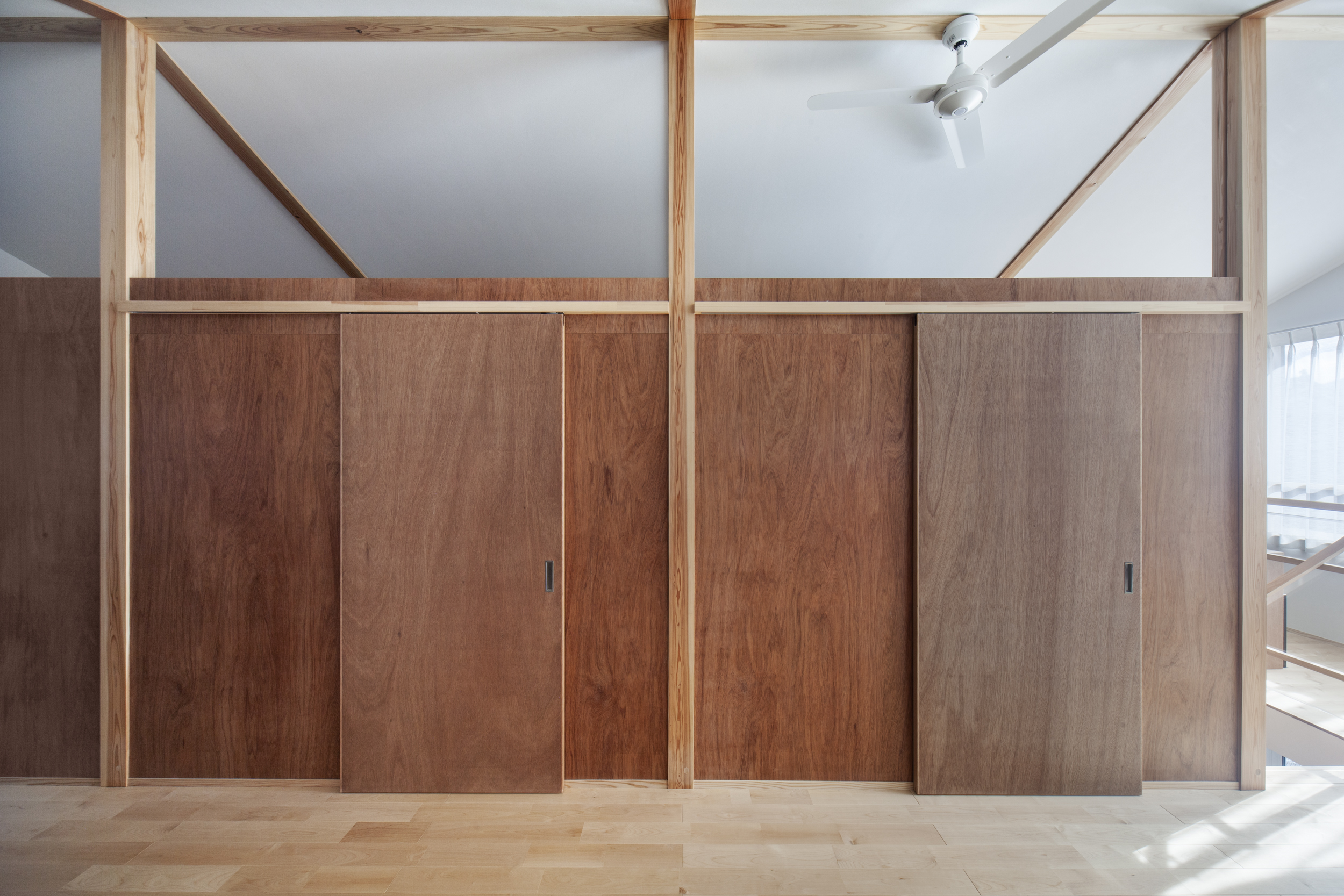
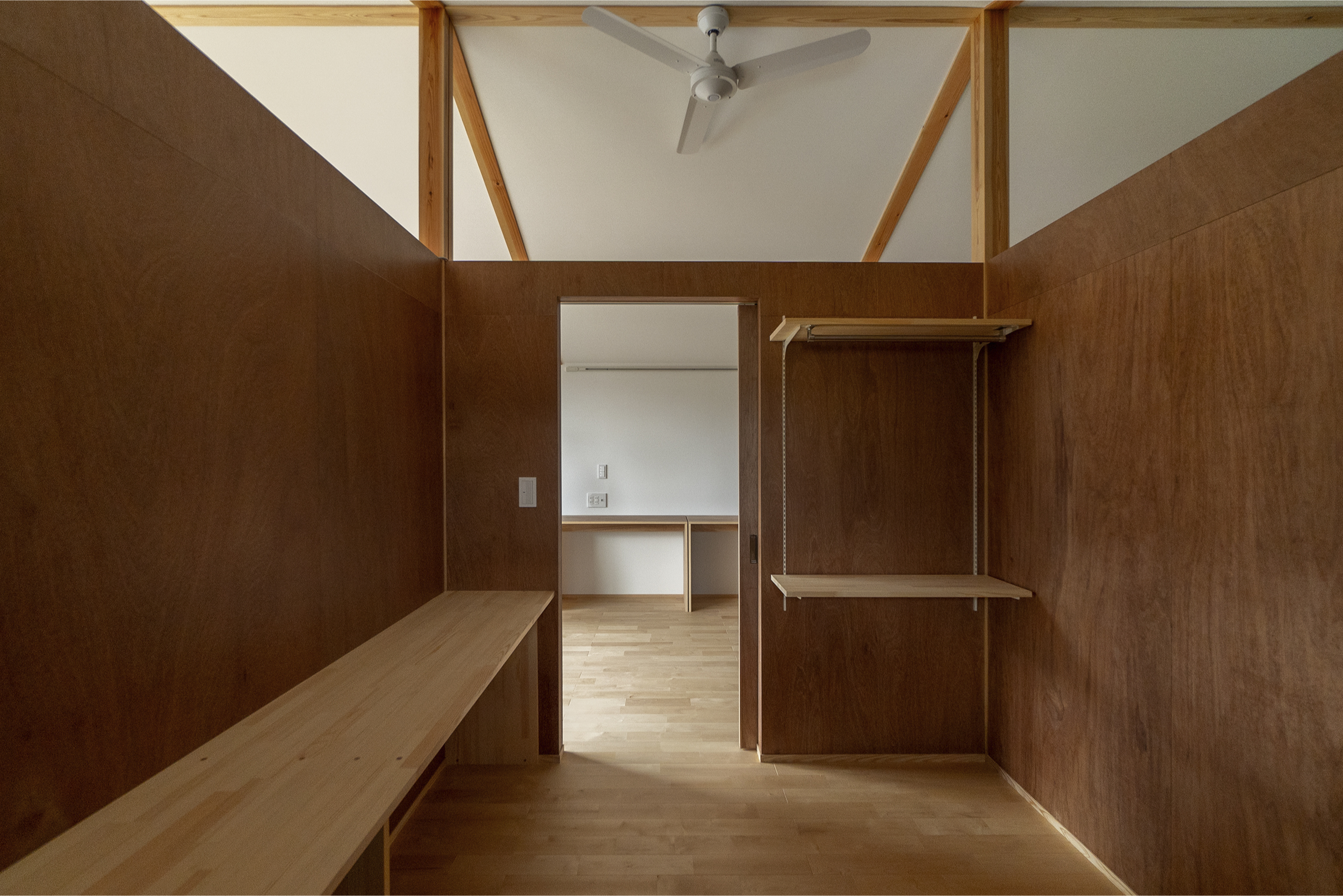
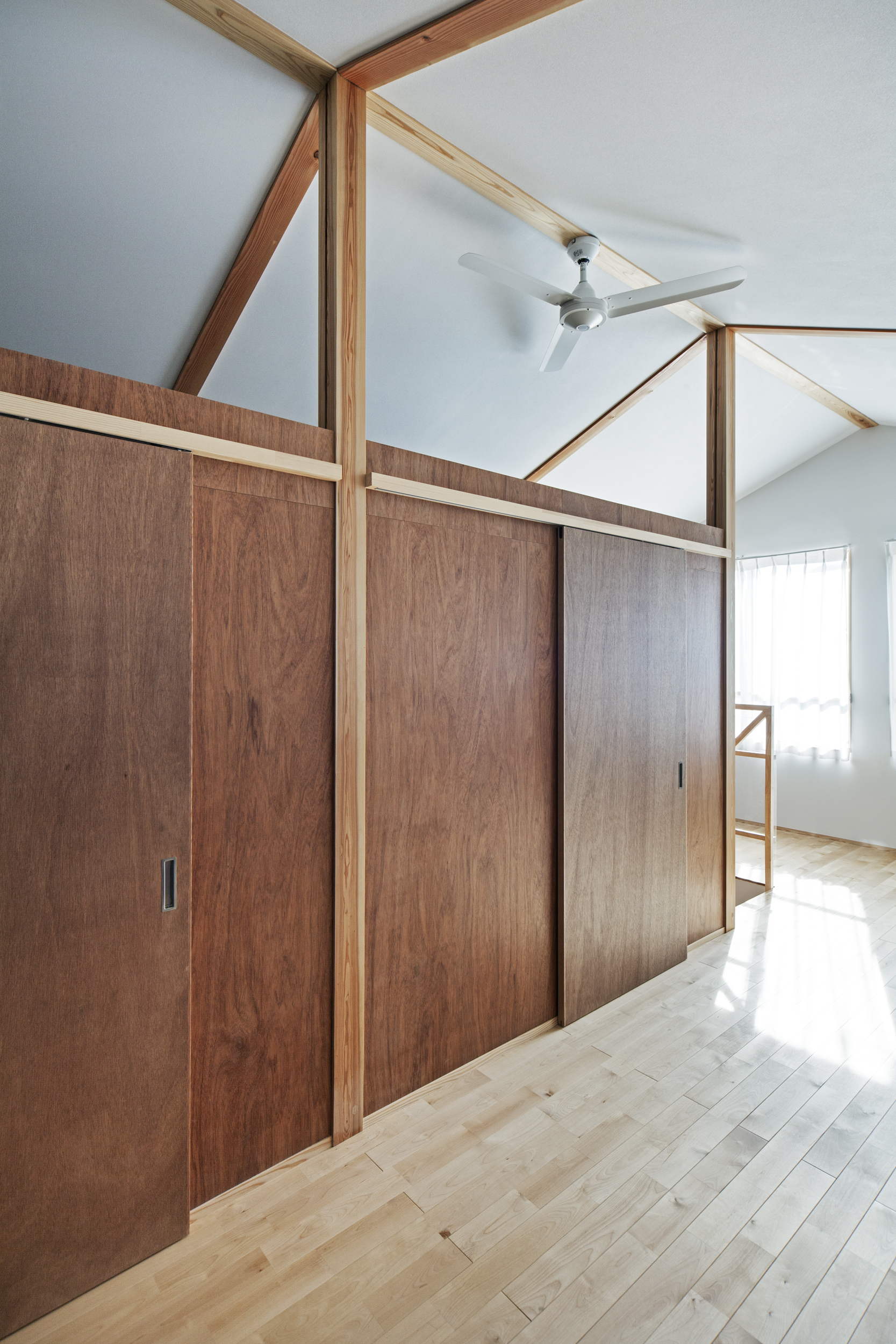
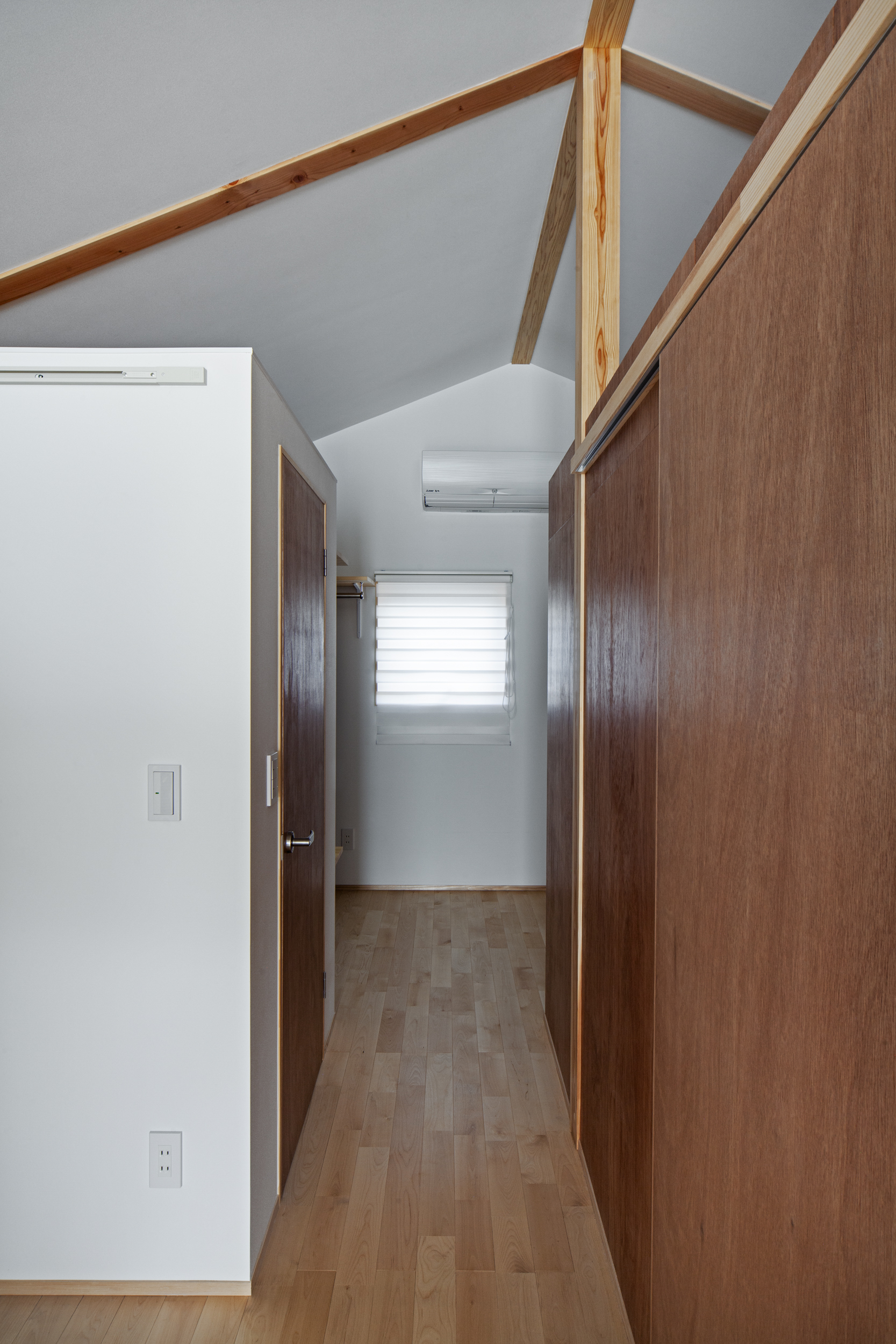
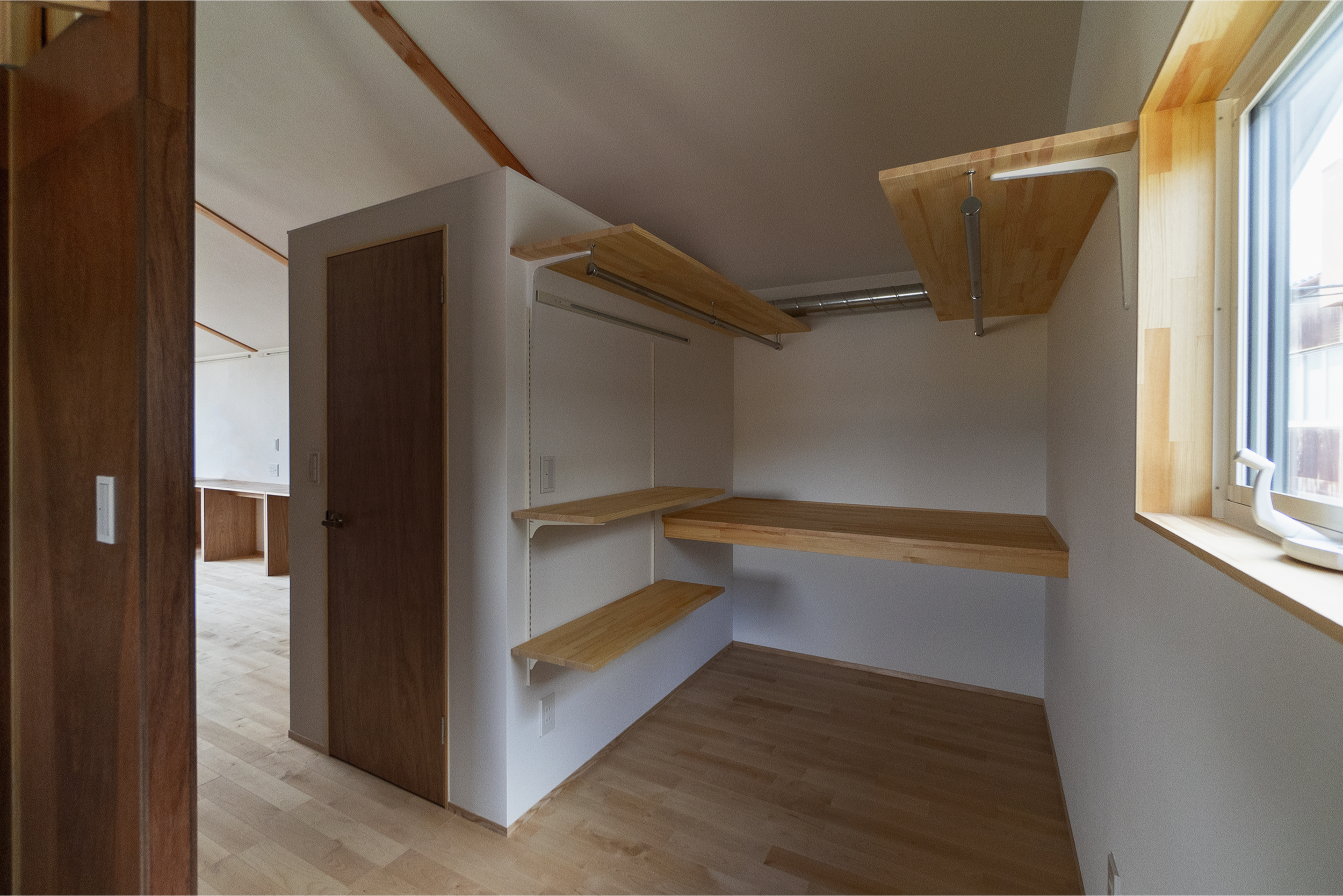
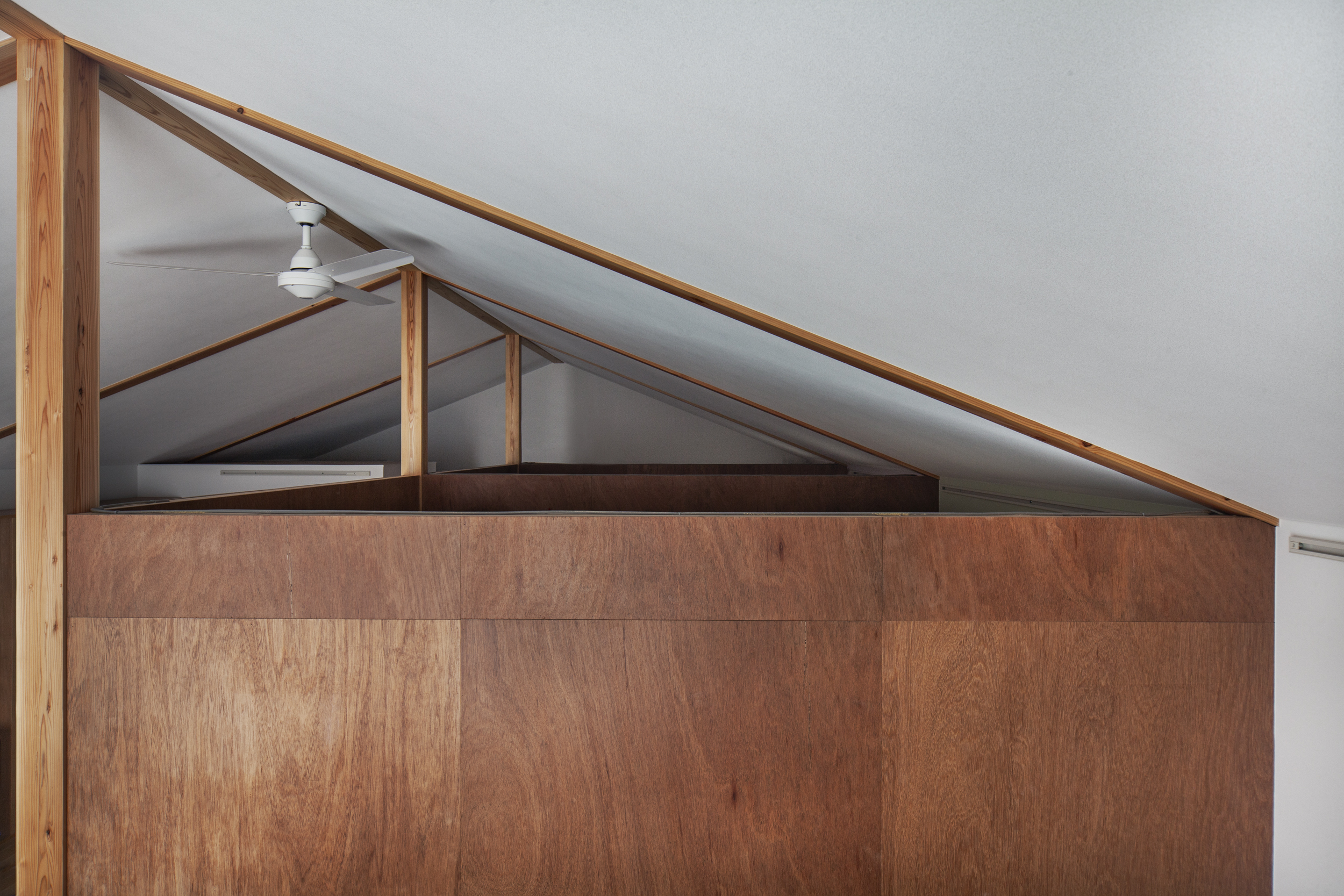
また、現状の間取りは暫定的なものとの考えから、1階は水周り以外の間仕切り壁は設けず、可動家具の配置で生活の変化に対応している。2階は主寝室と子供室(2室)に間仕切り壁を設けているが、将来的に撤去することを想定して、天井との取り合いをなくし、電気設備を露出配線としている。
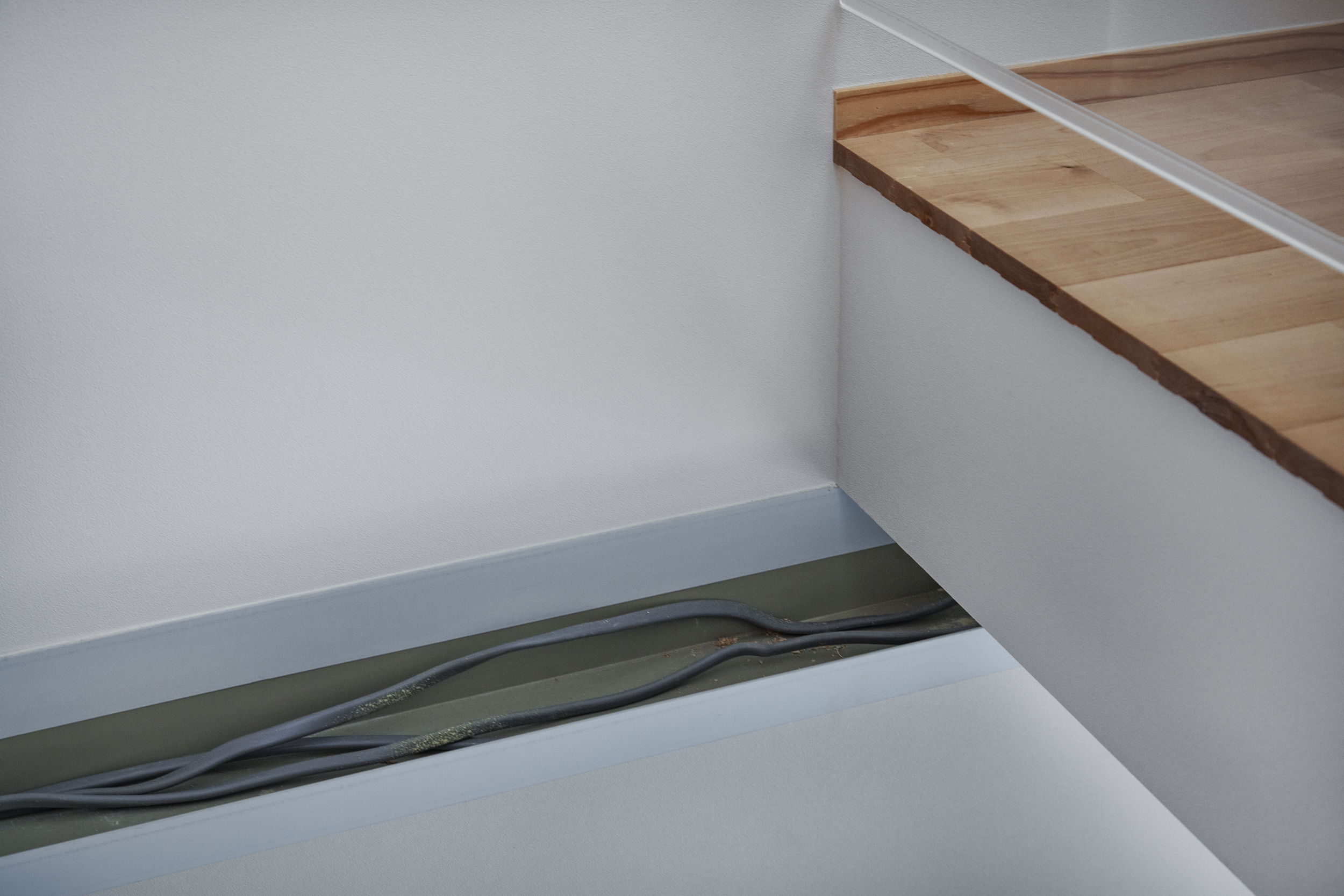
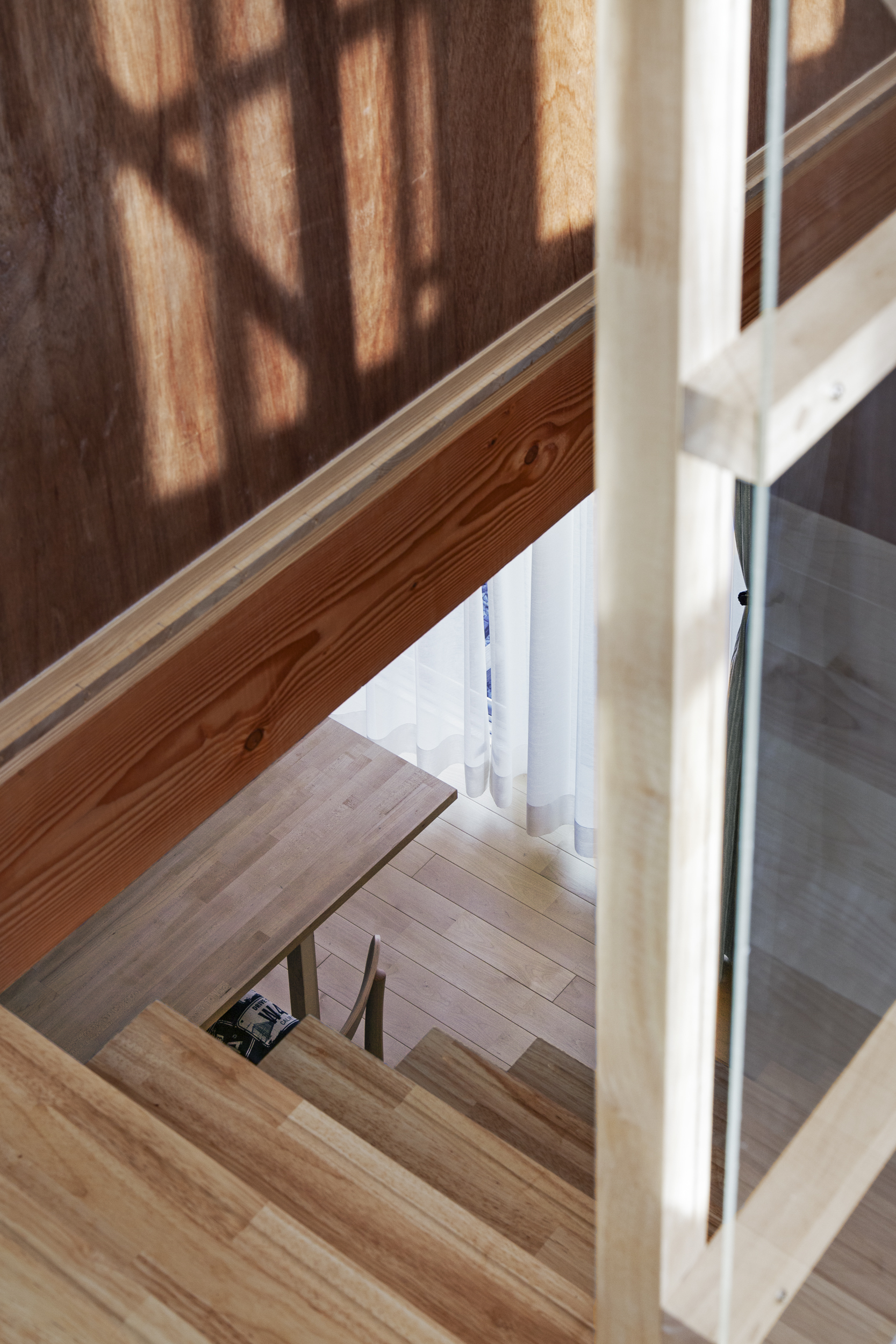
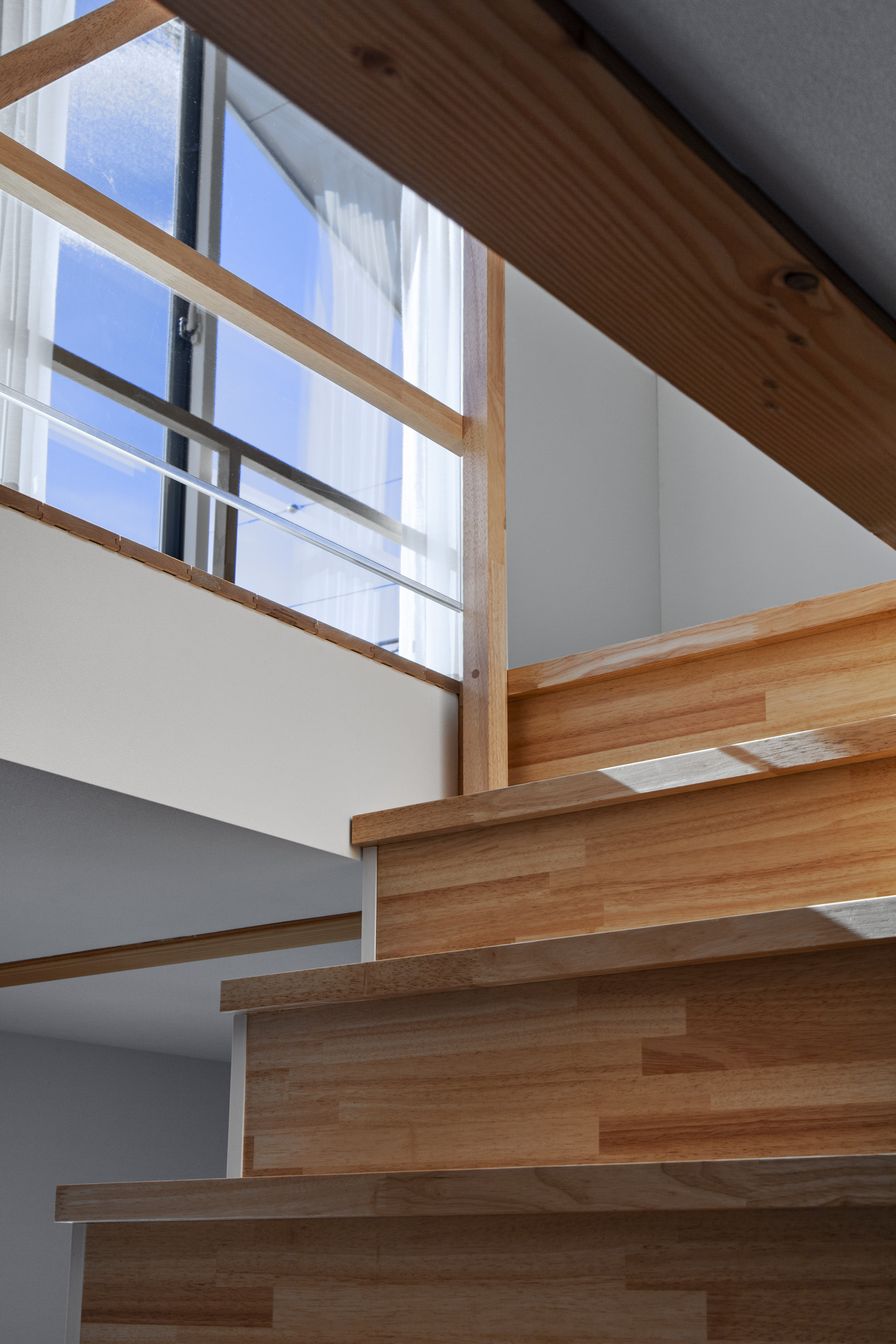
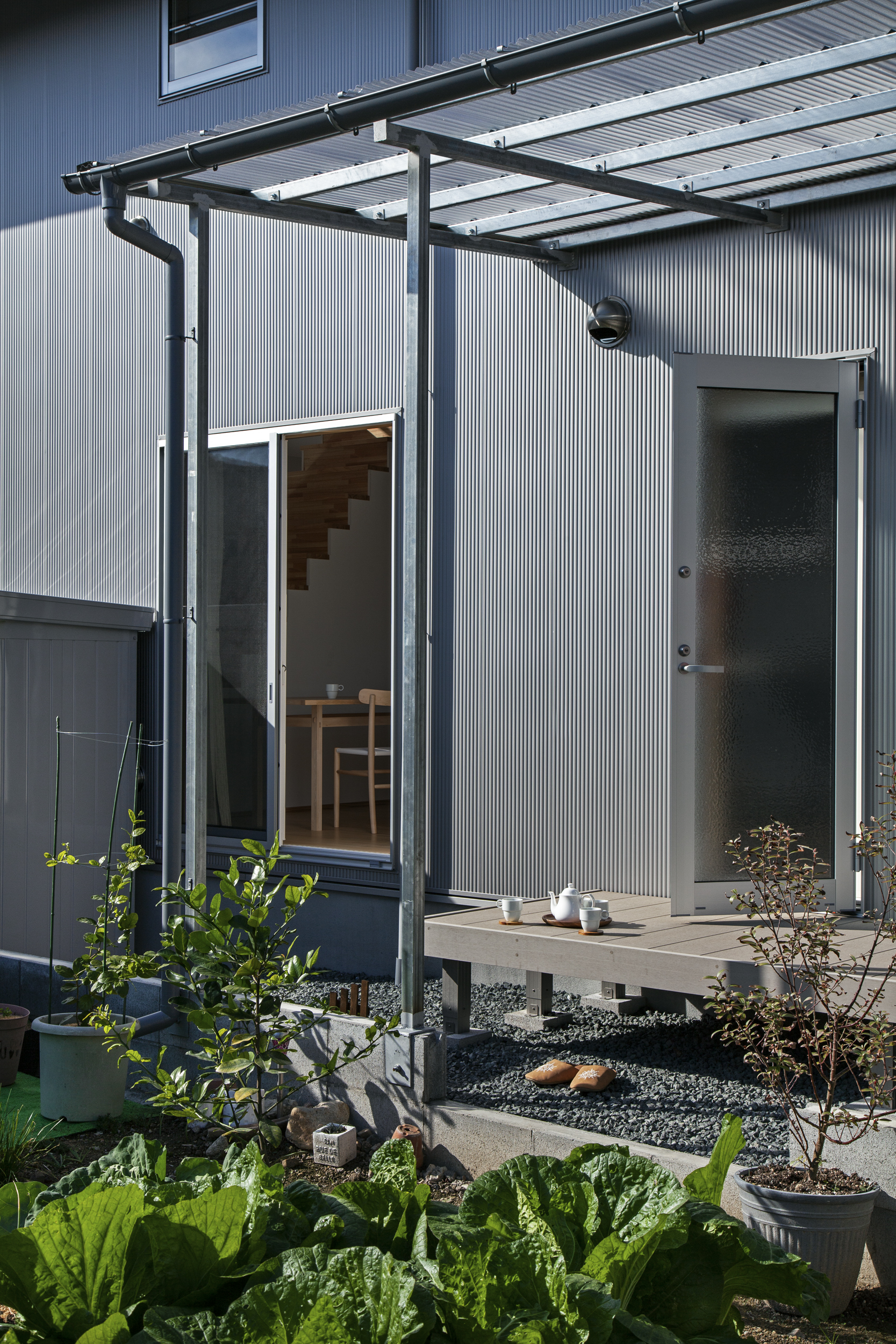
設えの変化と共に、住宅に手を加えるハードルを下げるために柱梁は全て現しとし、電気設備を1階の箱樋の中に露出配線とすることで、電気工事士の施主が自ら更新できる納まりとしている。
専用住宅として住み始めてはいるが、近い将来夫婦2人になった時、1階飲食店・2階住居、1階住居・2階工房などの併用住宅への転用や転貸も計画当初から想定した。 日本から、アメリカ、インドと移り住んできた家族の住まいに対する寛容なふるまいが、旧道に対して閉じた専用住宅の在り方を再考するきっかけになることを期待している。
This home for a family of four is situated on a corner lot along an old road where shops once lined the street.
The roads facing the south (the old road) and west of the site are both routes used by elementary school students; as a result, there is heavy traffic year-round, with children coming and going to and from school on weekdays and cars dropping off and picking up students for club activities on weekends. Furthermore, the site lies along the route from the nearest station to the trailhead for “Shiroyama” on the north side of the lot, resulting in a steady flow of people regardless of the day of the week or season. To address this, the design features a facade that is completely closed off on the west side and an open facade on the south side, overlooking the parking lot. This approach maintains a sense of distance from the street while establishing a clear presence along the old road.
Around the site, as shops close and buildings are replaced due to aging, mixed-use residential and commercial properties are increasingly being converted into single-family homes. Consequently, it is common to see parking lots along the old road, with closed-off residences situated behind them. While this project also places a parking lot along the old road, by adopting a sliding-door entrance—a design inspired by nearby shops—we aimed to integrate the parking area with the entrance and living room, creating a “second living room” where the atmosphere of daily life naturally spills out onto the old road.
The floor plan features a simple two-story layout on a 15-tsubo (approx. 50 m²) footprint, with the wet areas and the living-dining-kitchen (LDK) on the first floor and private bedrooms on the second floor. The 15-tsubo floor area is composed of a total of eight grids, each measuring 2,275 mm × 2,730 mm. Since one grid is slightly too wide for the bathroom, kitchen, and entrance (i.e., a bit loose), and slightly too narrow for the dining room, living room, and private rooms (i.e., a bit tight), the furnishings naturally cross these grids on a daily basis. We believed this would prevent the floor plan from becoming rigid.
Furthermore, since the current floor plan is considered provisional, no partition walls have been installed on the first floor except for wet areas, and the layout adapts to changes in lifestyle through the placement of movable furniture. On the second floor, partition walls have been installed between the master bedroom and the two children’s rooms; however, anticipating their future removal, we eliminated the junction with the ceiling and used exposed wiring for the electrical fixtures.
To lower the barrier to making changes to the home as its layout evolves, all columns and beams were left exposed. By routing electrical wiring through exposed conduits in the first-floor box ducts, the design allows the client—who is a licensed electrician—to perform updates themselves.
Although the family has begun living here as a single-family home, the design has from the outset anticipated the possibility of converting or subletting the property into a mixed-use residence—such as a restaurant on the first floor with living quarters on the second, or living quarters on the first floor with a workshop on the second—when the couple eventually becomes a two-person household in the near future. We hope that this family’s flexible approach to housing—having moved from Japan to the United States and then to India—will serve as an opportunity to rethink the conventional model of a private residence that is closed off from the old street.
h邸
- 設計
studio36
- 構造
構造設計スタジオ シエスタ
- 施工
株式会社シービル
- 写真
Asuto Noda
studio36